
Start here: Browse the Self-Improvement Guides and pick the path that fits your situation.
“No.”
It’s a simple word. Powerful too. Yet it is often met with a less-than warm reception. There are many people who say “yes” to most things thrown their way, often in fear of saying “no.”
In reality, saying “no” isn’t anything other than being assertive. Not abrasive, confrontational, or anything in between. It’s an important but small part of assertive communication. Mastering it means to know your boundaries and communicate them in an effective, non-confrontational manner. If you don’t honour your boundaries, then you are giving someone else the opportunity to take advantage of you. By setting and enforcing what you’re comfortable with, whether that’s in your work, social, or personal life, you form your character and establish a social image (even if the social circle itself is small).
Feeling confident enough to the point where assertion is second nature to you may take longer than reading this article, but you can take steps towards stopping people from walking all over you today.
Here are some tips to help you master assertive communication.
What happens when we’re not assertive
As just touched on, people may take advantage of you when you’re not assertive, intentionally or unintentionally. For example, if you don’t set boundaries in your friendships and romantic relationships, you run the risk of being drawn into spaces you aren’t comfortable or doing things you don’t want to do. Assertive communication ensures you attract people that understand you and your needs, while also respecting your boundaries.
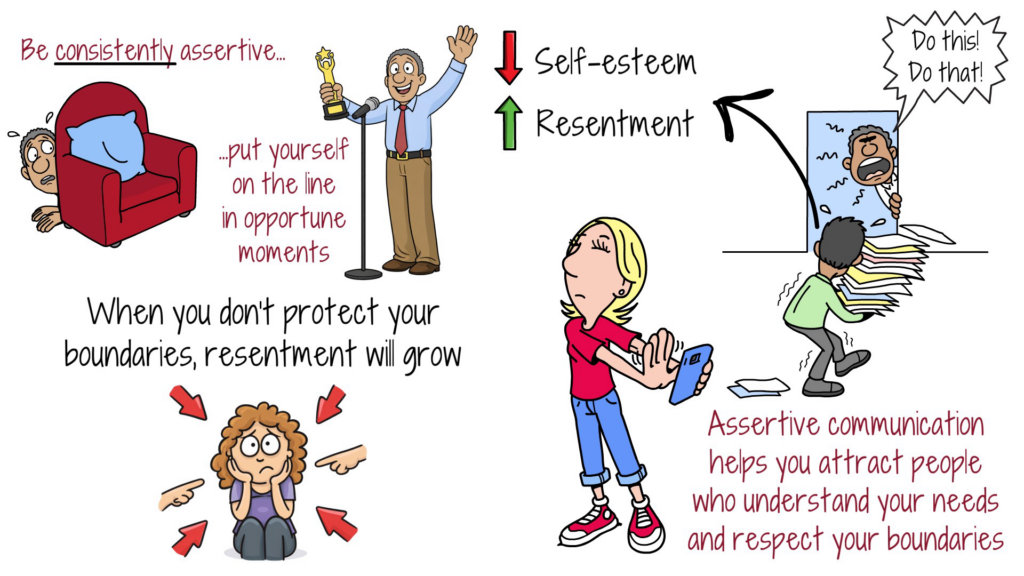
As a result, self-esteem can diminish and from there, resentment will have the conditions necessary to flourish. When you’re not leading with assertive communication, you’re essentially disrespecting yourself. Without taking active measures to prevent you from getting into scenarios you don’t want but could’ve avoided, you don’t have the secure knowledge that you’re taking care of yourself. Slowly and then all at once, that feeling of resentment will grow.
Lastly, when you’re not consistently assertive, it’s likely you’ll miss opportunities through fear of not speaking up in important moments. Being assertive doesn’t simply mean saying “no” when presented with something you don’t want, it also means saying “yes” and putting yourself on the line in opportune moments. You never know when they are going to appear.
Clarify the Difference: Passive vs Aggressive vs Assertive
Setting and enforcing your boundaries often feels like a thin rope to walk across. Imagine assertive communication as the centrepiece of a Venn diagram, with aggressive and passive communication sitting either side. For ease, let’s take a look at the crucial differences:
- Passive Communication: Avoiding conflict and feeling afraid to speak up. This often leads to resentment and feeling ‘walked over.’
- Aggressive Communication: Confrontational, disrespectful, can burn bridges
- Assertive Communication: Calm, respectful, direct, upholding one’s own rights without trampling on others.
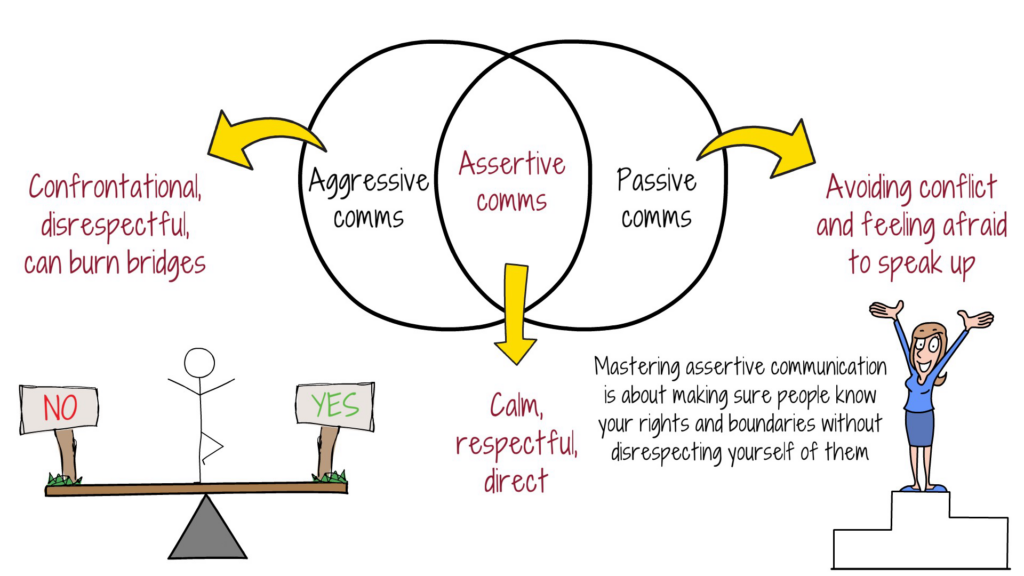
Although assertive communication touches on both passive and aggressive styles, your understanding of the differences is vital as it can decide how you are perceived and subsequently treated by those you’re communicating with. Don’t forget, mastering assertive communication is about making sure people know your rights and boundaries without disrespecting yourself of them.
But how do you actually do this?
Core Strategies to Become More Assertive
It’s easy to wake up one morning, look in the mirror and decide you’re going to be more assertive. It’s another to put those affirmations into practice. For starters:
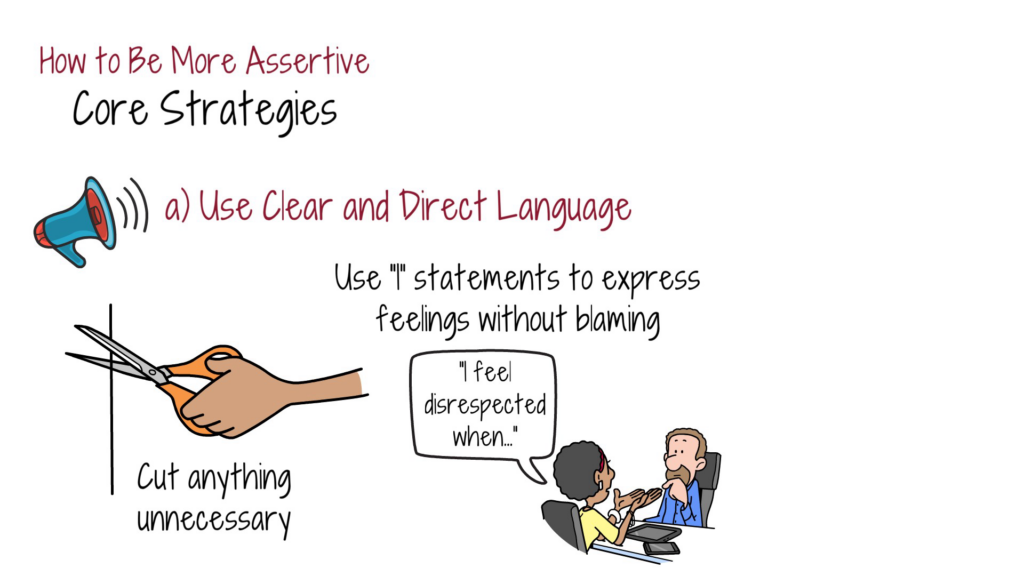
a) Use Clear and Direct Language:
- Be concise – get to the point to avoid confusion. If anything feels unnecessary, you don’t need to mention it. Remember, people can only reference what you’re saying, so it’s important to say the right things.
- Use “I” statements to express feelings without blaming, e.g. “I feel disrespected when…” This centres your feelings in a sensitive way – it forces someone to stop and wonder how you have got to that point instead of directing negativity to anyone around you.
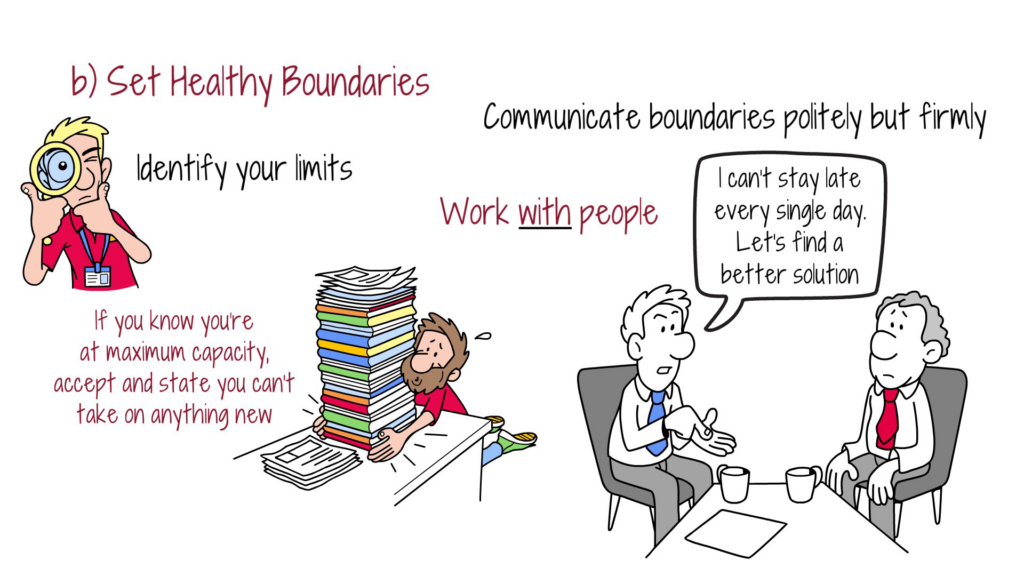
b) Set Healthy Boundaries
- Identify your limits: Know what’s acceptable and what isn’t before entering a situation. For example, if you know you’re at maximum capacity at work, accepting and stating you can’t take on anything new helps establish your boundaries and prevents any potential disappointment.
- Communicate boundaries politely but firmly: “I can’t stay late every single day – let’s find a better solution.” Something like this is collaborative, calm, respectful, and most importantly, assertive. State your needs, don’t demand people meet them. Work with people.
c) Practice Saying “No” (without guilt)
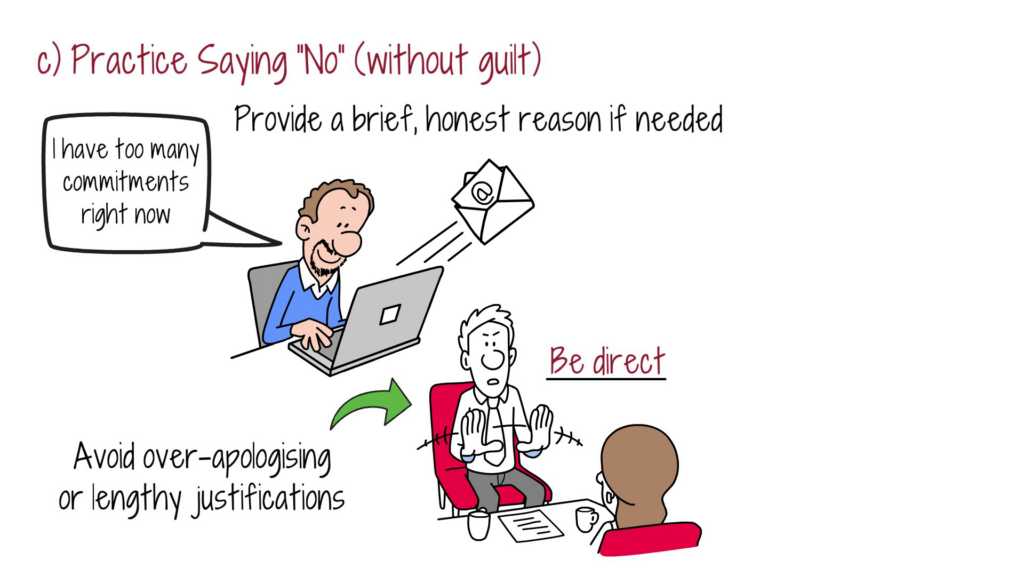
- Provide a brief, honest reason if needed: “I have too many commitments right now.” Although it isn’t necessary to provide a reason every time you turn something down, there are many dynamics where a reason is not only desired but expected. It’s good to have a solid one. This comes when you know your needs and boundaries.
- Avoid over-apologising or lengthy justifications: saying more than you need to can seem like you’re justifying a lie, even if you’re telling the truth, so it’s better to be direct and avoid any suspicion. More importantly, you shouldn’t apologise for knowing what you need and taking steps towards that.
d) Maintain Calm Body Language
- Steady eye contact, relaxed shoulders, and an upright posture. Assertive communication requires confidence – you can exude it easily with your body.
- Keep your voice firm and even. No mumbling or shouting.
e) Emotional Control
- Remain calm even if the other person reacts negatively. Remember, this is about you, not them. Of course, different relationships require different responses, but by remaining calm, you’re keeping the conversation on track.
- If you feel triggered, take a moment (pause or slow your breathing) before responding. It is very important you honour your triggers, so don’t ignore them.
Practical Exercises & Role-Play
Remember those scenes where a character psyches themselves up before a situation, only for the camera to cut to them immediately folding? It happens, and not just to TV characters. Being assertive can feel like a performance, especially when you’re not used to it. So, to ensure you don’t crumble at a crucial moment, here are some practical exercises you can do:
- Mirror Practice: rehearse a challenging conversation in front of a mirror (practice makes perfect)
- Record Yourself: try speaking your boundary or message on your phone to see how you come across
- Role-Playing with a Friend: get comfortable asserting yourself in a low-pressure setting first
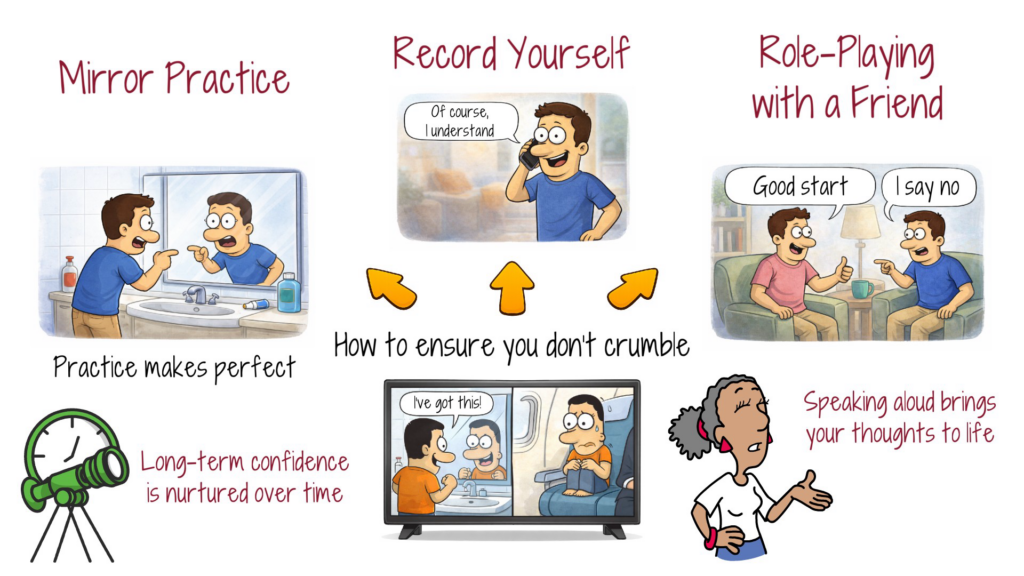
While you can make a change immediately, long-term confidence is a skill you must nurture over time. You may feel slightly strange talking to yourself this way, but speaking aloud brings your thoughts to life.
Don’t underestimate the power of your own voice.
Key Mindset Shifts
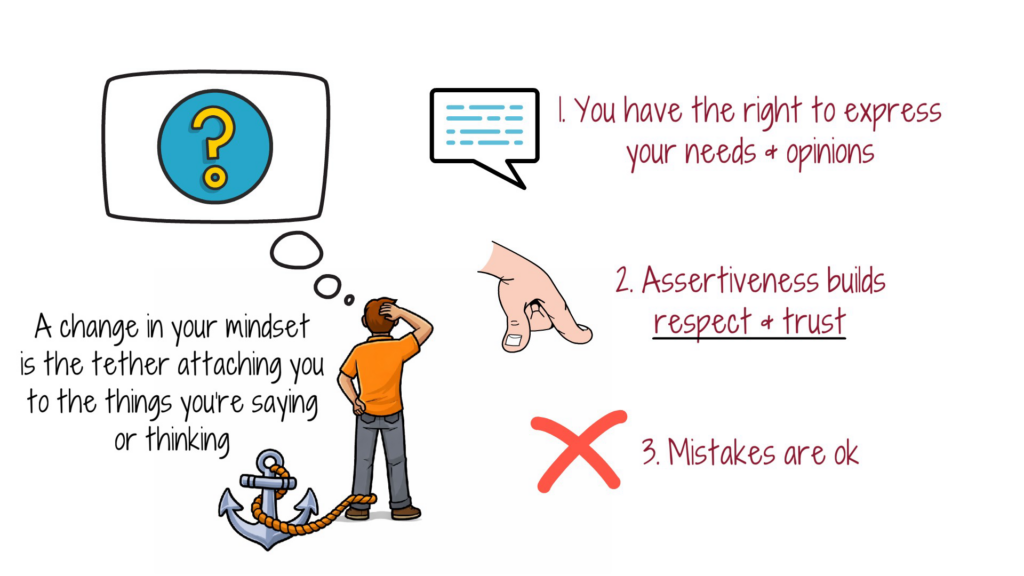
Before you take any steps forward, there is one thing you should make sure you’re working towards. Without a change in your mindset, there won’t be a tether attaching you to the things you’re saying or thinking. You must genuinely believe it.
For starters, you have the right to express your needs and opinions, just as everyone else does. You are not being “selfish” or “unreasonable.” It is both of those things to expect the world to bend to you, but not to be heard.
Secondly, assertiveness builds respect and trust within others and yourself. Even if someone doesn’t like you, they will know why. Alternatively, when you know someone on a deeper level, it becomes easier to trust and respect them.
Lastly, mistakes are okay. Assertive communication is a skill that takes time to master. Be patient with your journey.
Address Common Concerns and Fears
Before this article wraps up, it’s vital we address common concerns and fears people have when choosing to be more assertive:
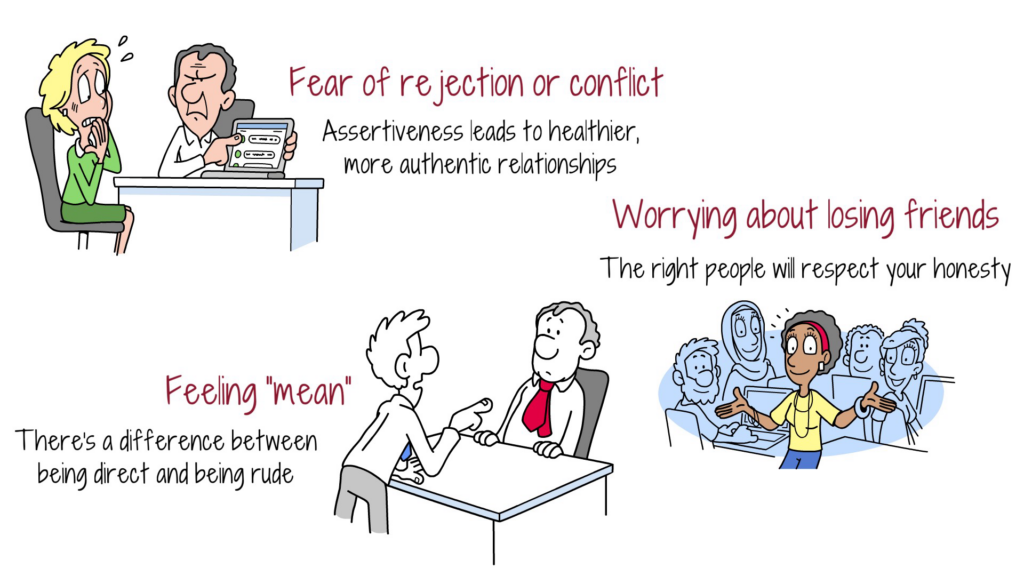
- Fear of rejection or conflict: assertiveness doesn’t guarantee zero conflict, but it leads to healthier, more authentic relationships. Be prepared to stand your ground but don’t go into interactions expecting confrontation. It may subconsciously affect how you approach the matter.
- Feeling “mean”: there’s a difference between being direct and being rude.
- Worrying about losing friends: the right people will respect your honesty. Those who don’t may not be a good fit long-term. It’s important to have friends who understand you will grow and change over time.
Above all, remember that when done correctly, assertive communication won’t feel forced. It – and the subsequent confidence – will feel like second nature.
