
We live in a fast paced world – it’s go, go, go all the time. Get up early and go to the gym, go get coffee, go make a healthy breakfast, go to work, go call that family member, go to that class on the weekend, go to the dinner party…And if you can’t keep up with the quickness in which we all seem to now live our lives, you (or someone you know) may be viewing you as lazy. But could it really just be that you’re overstimulated? With so much to keep up with, how could you not be overstimulated?
When you hear or feel that you’re being lazy, it can sting. This isn’t a desirable trait and it can mean that you lack any drive, motivation or passion for the things in your life. But if that perceived trait is really just a symptom of overstimulation, it changes everything.
While we may not be able to change the world we live in and how it operates at such a high level, we can change how we view our reaction to it. And we can choose to recognize it for what it is – overstimulation, not laziness.
Writer and poet, Edgar Allen Poe, put it like this,
“That which you mistake for madness is but an overacuteness of the senses.”
Could it be that you’re not actually being lazy, but you’re simply experiencing an overacuteness of the senses and have become overstimulated?
Let’s examine this phenomenon and talk about how to reclaim your focus and motivation.
What is Overstimulation?
Before you can understand how to combat overstimulation, you first must understand what it is. Overstimulation is what happens when your brain becomes overburdened with information. This can stem from too much noise, such as loud music or talking, or it comes from that to-do list that seems to have grown to be a mile long.
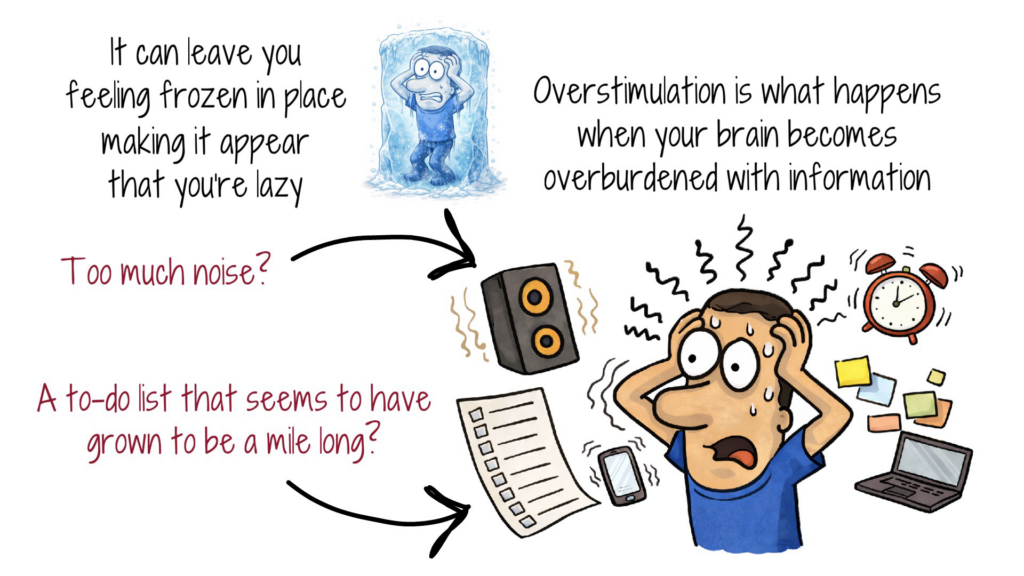
When your brain reaches that point of being unable to intake any more information, it can leave you feeling frozen in place. To the naked eye, this could make it appear that you’re lazy rather than just being too overloaded to move forward with the task at hand.
Feelings of being overstimulated aren’t a new thing – although the pressures of the society we live in can make it feel like a more recent matter to deal with. From doom-scrolling on our phones and getting “lost” to the constant ping of notifications while we’re trying to accomplish a task, our minds have become perpetually engaged. This constant engagement leads to mental fatigue, decision paralysis, and an overall feeling of being drained. The odd thing is that this can occur at any moment, whether you have a lot on your plate or not. Even if you have appeared to be doing “nothing” for a period of time, overstimulation can still creep up from behind and ensnare you.
Signs You’re Overstimulated
Now that you understand what overstimulation is, you can learn to recognize the signs. Being able to recognize when you’re overstimulated rather than lazy will be key in getting yourself back on track.
Some signs of overstimulation are:
- Constantly jumping from task to task, unable to focus on one thing for very long, and frantically moving around trying to complete everything at once.
- Tasks feel urgent (even if they’re really not).
- You check your phone as a distraction or lean into those phantom rings, thinking someone is trying to reach you by call or text.
- You feel more tired after scrolling on your phone for an hour, even though you were laying on the couch or bed the whole time.
- Feelings of guilt arise after not following through on what you know you should be doing.
These signs can help you determine if you’re experiencing laziness or if the sensation at hand is a mere signal that your mind is overstimulated.
Writer Anne Lamott said,
“Almost everything will work again if you unplug it for a few minutes, including you.”
Recognize the signs of overstimulation and step away to unplug when you need to.
How Overstimulation Mimics Laziness
When the brain becomes overloaded with information and sensory elements, it seeks a break.
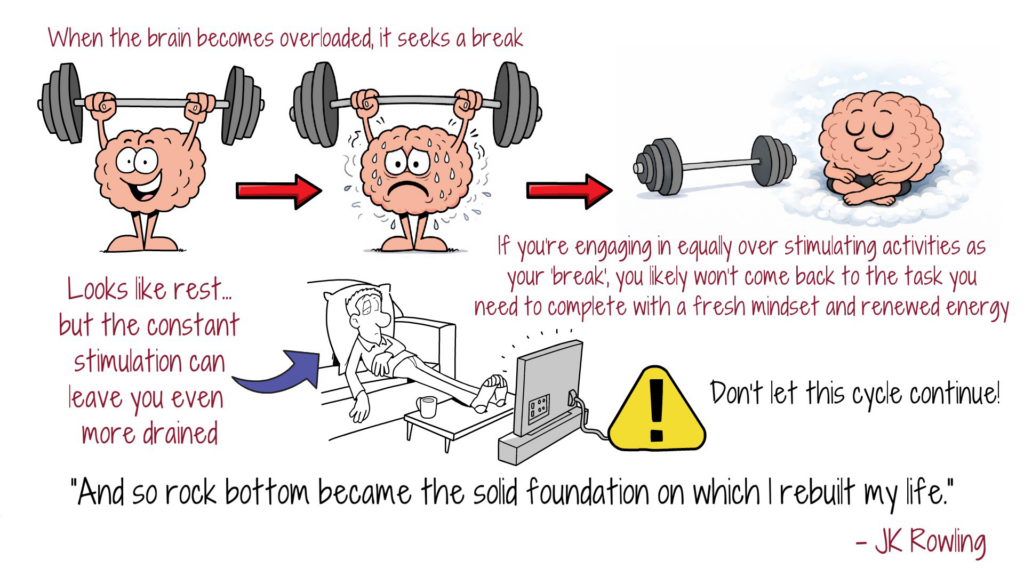
This often manifests as a desire for downtime and rest, which can easily be mistaken for laziness. It’s okay to take a break when you need one, but it’s how you spend that break that really matters. If you’re engaging in equally over stimulating activities as your ‘break’, you likely won’t come back to the task you need to complete with a fresh mindset and renewed energy.
As things compound and this cycle continues, you may actually end up creating more overstimulation as you fall behind and avoid the things you really need to do. This cycle can be destructive, leaving you feeling frustrated and fatigued.
JK Rowling, author of the popular Harry Potter books, said,
“And so rock bottom became the solid foundation on which I rebuilt my life.”
Sometimes, things may need to get worse before they get better. And only after being in that cycle of overstimulation and seeing how you handle it can you see what needs to change.
How to Reduce Overstimulation
You’ve taken the steps to recognize overstimulation. Now it’s time to learn how to reduce it.
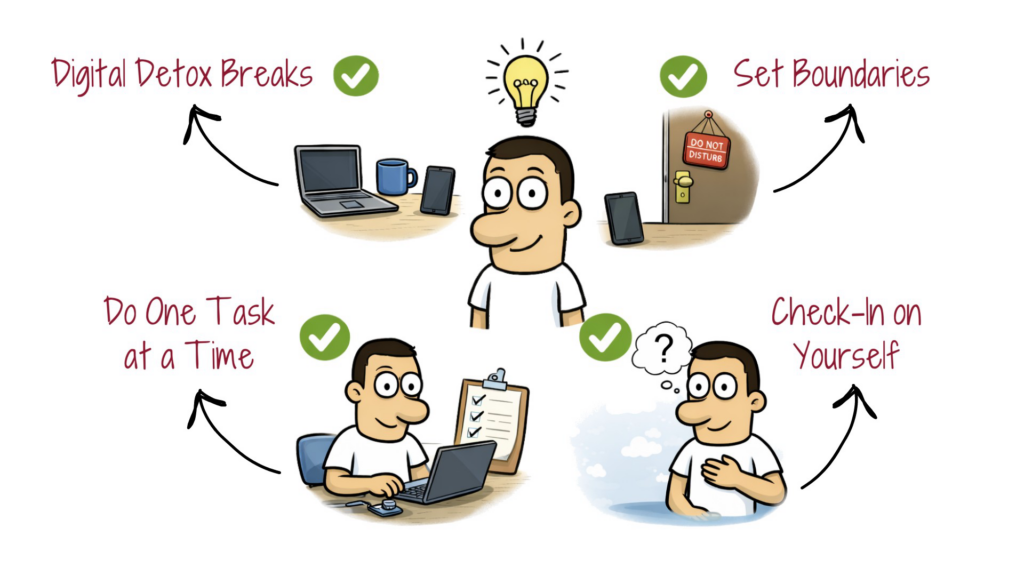
There are a few ways you can reclaim your focus when your mind and body become overstimulated. These are:
- Digital Detox Breaks: Schedule phone-free periods throughout your day. Even short breaks can make a significant difference. No text or notification is likely an emergency and it can wait awhile before you address it.
- Set Boundaries: Know your limit and how you best work and stick to it. If this means you need to put your phone in another room or hang a sign on your office door that you cannot be disturbed at this time, do it. Set yourself up for success by setting boundaries.
- Do One Task at a Time: Focus on one task at a time. Multi-tasking is a myth. It only divides your attention, increasing mental strain and overstimulation.
- Check-In on Yourself: Pause periodically to assess your mental state. Are you feeling overstimulated? If you are, take a moment to breathe and recenter. Remember, it’s okay to unplug when you need to.
Going Further – Replacing Chaos with Healthy Inputs
I gave you a few ideas on how you can reduce overstimulation when you’re in the throws of it. But let’s go even further and learn how to replace chaos with healthy inputs. By setting up habits and workflows that truly work for you, you may never reach the point of overstimulation.
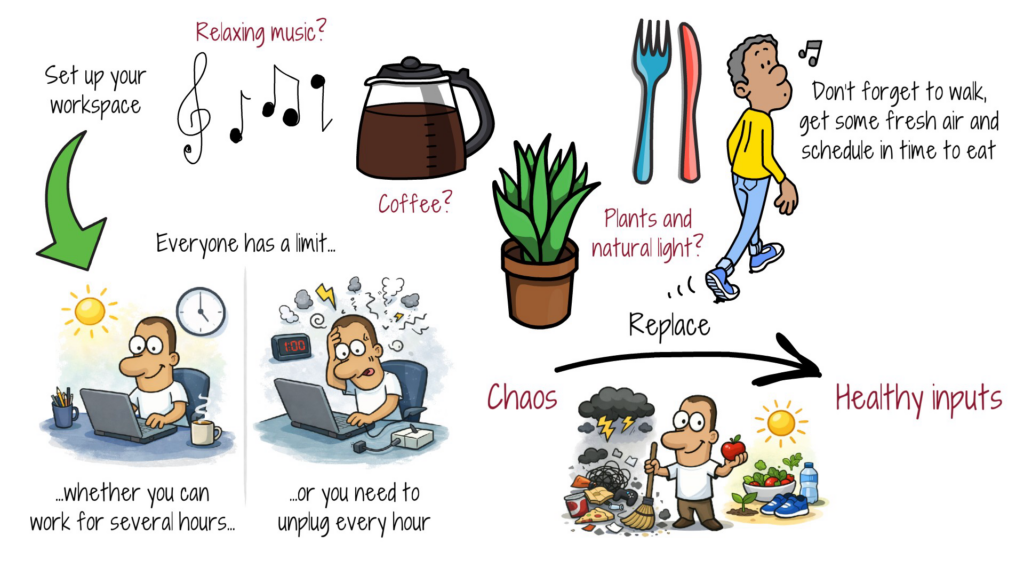
Everyone has a limit. You may be able to work for several hours without a brain break or you may need to unplug every hour in order to keep your mind and body from reaching a point of overstimulation. Know when you’re prone to taking a break and work it into your schedule.
For example, first set up your workspace to be conducive to productive, focussed work. You can do this by turning on relaxing music, getting a cup of coffee or tea, and surrounding yourself with plants and natural light. After a few hours of work, go for a walk and get some fresh air. Don’t forget to schedule in time to eat too! When we get hungry, our ability to rationalize and navigate challenges becomes even harder. It’s called brain food for a reason!
By replacing common times and triggers for chaos with healthy inputs, you can help yourself stay in a place of productivity and focus.
Reclaiming Motivation & Productivity
It’s important to remember with anything you do that motivation is not a finite resource. It ebbs and flows. When your mind is clear and focused, you may find that motivation naturally occurs. The way to trigger it is through your habits and the choices you make in the moment when you feel overstimulation coming on.
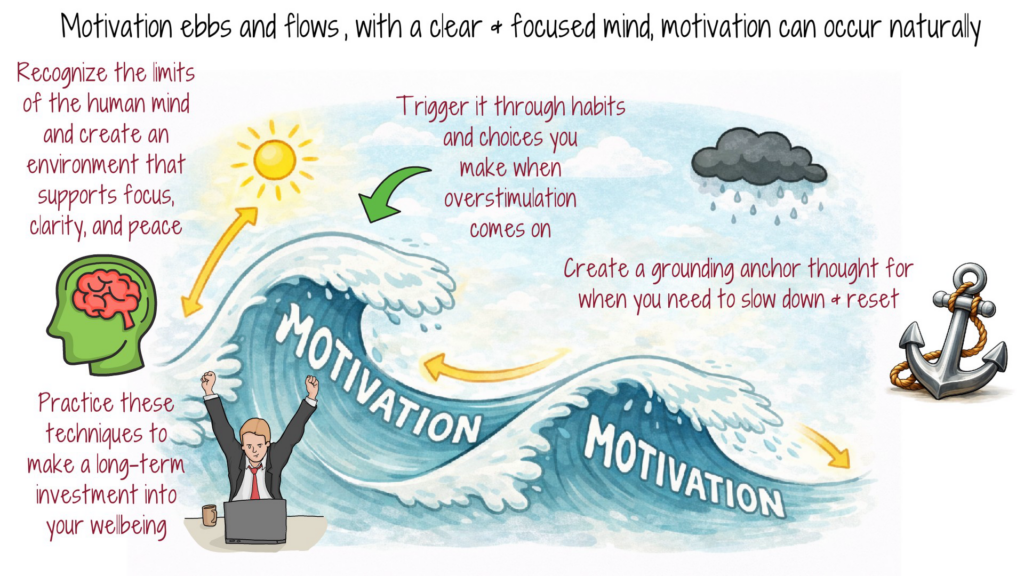
You can use any of the suggestions above to reduce overstimulation or create a grounding anchor thought to lean on when you need a mental reminder to slow down and reset. Through practicing these techniques, you’re not just equipping yourself with a slew of quick fixes – you’re setting yourself up for success and making a long-term investment into your wellbeing.
Final Thoughts
As we navigate the stresses of modern life, understanding overstimulation and knowing how to reduce it is crucial. It is not about being “lazy.” It is about recognizing the limits of the human mind and creating an environment that supports focus, clarity, and peace. Embrace the necessary changes, and reclaim control of your mind.
