
Start here: If procrastination is the problem, begin with the Procrastination Guide (then come back to this post).
“You’ve got to wake up every morning with determination if you’re going to go to bed with satisfaction.” — George Horace Lorimer
Procrastination isn’t a character flaw. It’s a system problem. Build a better system, and delay stops winning.
Most people don’t lose to laziness. They lose to drift. They open a tab. They take a “quick” scroll. They tend to a dozen low-stakes fires and call it a day. The cost of this is compounding regret, stalled income and fragile confidence.
And here’s the kicker: time debt charges interest. Every hour you defer the hard thing, you pay twice: once in calendar time, again in mental load. That’s how years disappear.
Treat time like it’s $1,000/hour
Procrastination thrives when time feels cheap. Make it expensive. When an hour is “worth” $1,000, you stop donating it to low-leverage busywork. You choose like a pro, not a pleaser.
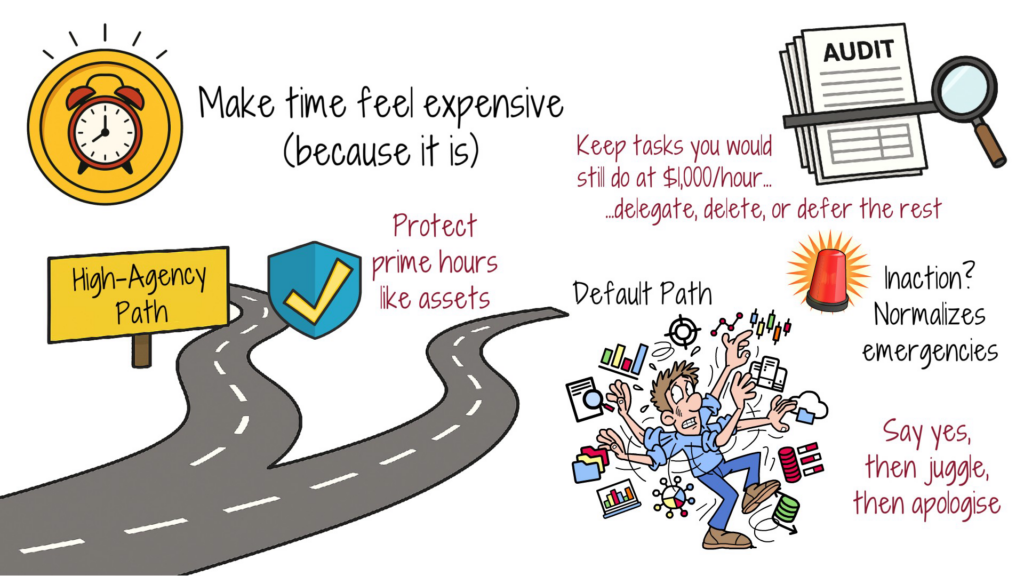
The Default Path is to say yes by default, then juggle, then apologize.
The High-Agency Path is to protect prime hours like assets.
Audit your last week. Which tasks would you still do at $1,000/hour? Keep those.
Delegate, delete, or defer the rest.
The cost of inaction is you normalize emergencies. Your best work never gets calendar space. Your future looks suspiciously like the last quarter.
Ban “busy”
“Being busy is a form of mental laziness.” — Tim Ferriss
Busyness is socially rewarded. Results are what pay. Procrastination often masquerades as “looking engaged” – slack pings, inbox sweeps and “quick” meetings. Rip out the roots: design deep, distraction-free blocks.
Set two 50–90 minute blocks daily for one mission-critical outcome. Door shut. Notifications off. Notes ready. When the block starts, you don’t “just check one thing.” You build. Then you stop. Then you rest. Then repeat.
The cost of inaction here is that shallow work fills every crevice. The real work never gets oxygen.
Kill the energy leaks
You don’t procrastinate because you’re weak. You procrastinate because you’re depleted. Energy and attention are finite. Every context switch taxes both, and the tax compounds.
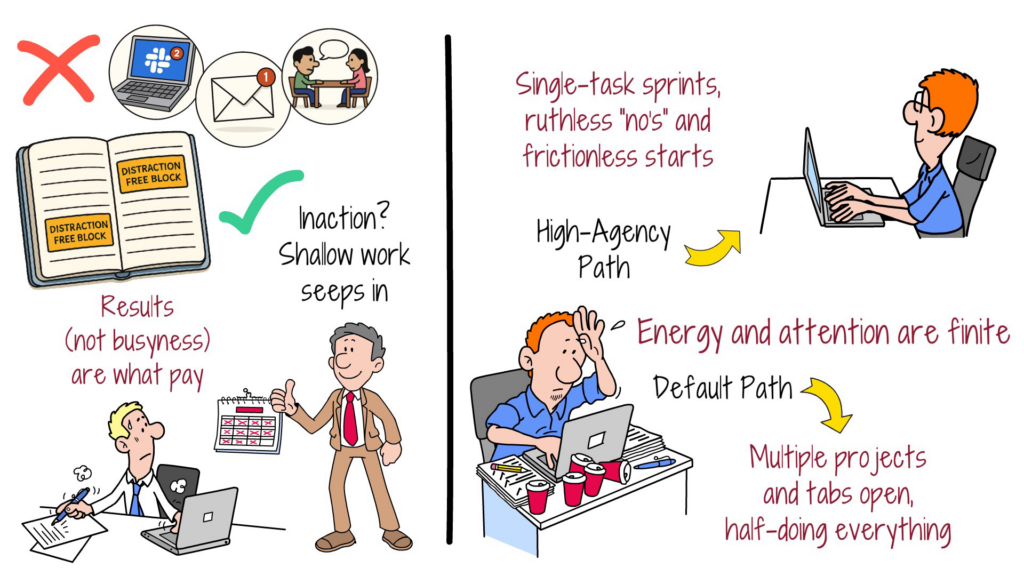
The Default Path: three projects open, five tabs flashing, half-doing everything.
The High-Agency Path: single-task sprints, ruthless “no’s,” and frictionless starts. That means a clear desk, a preloaded document and the first sentence written. Multitasking is not talent, it’s leakage.
The cost of inaction is crawling through the day on fumes, then self-medicating with more screen time. Then starting tomorrow already behind.
Choose learning and creating over entertainment
“Ordinary people seek entertainment. Extraordinary people seek education and learning.” — Benjamin Hardy
Procrastination isn’t just delay, it’s displacement. Something is always replacing the deep thing. Choose what replaces it on purpose: creation over consumption, education over entertainment.
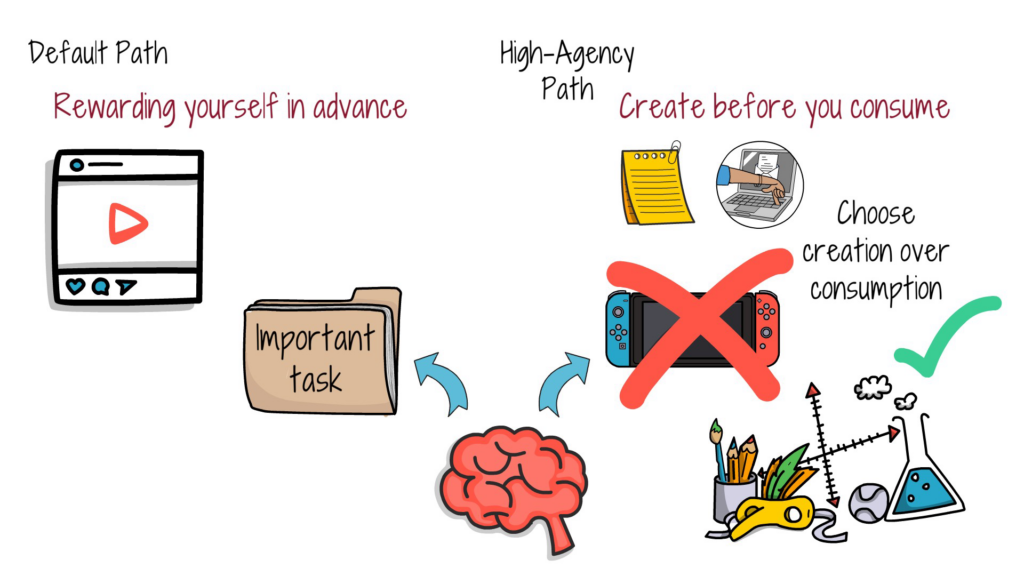
The Default Path: rewarding yourself in advance. A video first, work later, maybe.
The High-Agency Path is to “Create before you consume.” 30 minutes of output before a single input. Write the memo. Ship the draft. Hit publish. Then you can scroll guilt-free.
The Cost of inaction? Your inputs outrun your outputs. Your skills stagnate. Your opportunities shrink.
Make failure the plan, not the panic
“We can be truly successful only at things we are willing to fail at.” — Mark Manson
Fear of looking foolish is procrastination’s favourite leash. Design for small, frequent losses and the fear loses its bite. Progress is messy on purpose.
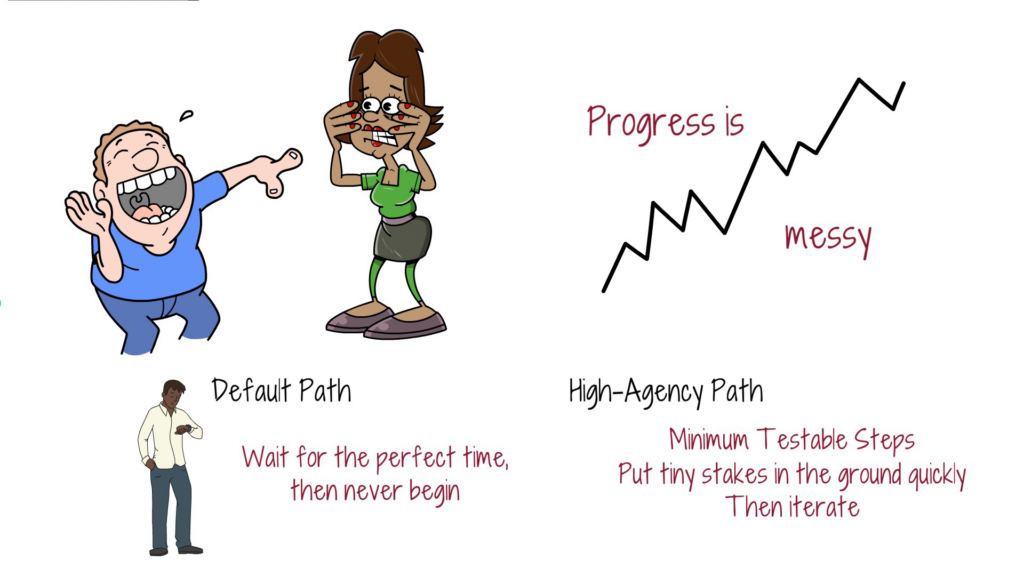
The Default Path is to wait for perfect clarity, then never begin.
The High-Agency Path cuts work into Minimum Testable Steps such as 15-minute drafts, five-user tests and micro-launches. Put tiny stakes in the ground quickly. Iterate publicly. Confidence follows evidence.
The cost of inaction here is that you protect your ego and sacrifice your future.
The day I stopped hiding behind “safe”
When I started creating videos, one comment branded a video “the worst I’ve ever seen.” It gutted me. For months afterwards, I wrote only vanilla. No sharp edges. No strong claims. I called it “crafting.” The truth? I was procrastinating – hiding drafts in Google Drive, tinkering with titles, waiting to be certain. My script writing stayed average because I optimized for zero criticism, not maximum value. Eventually I flipped the frame: my job wasn’t to dodge dislike, it was to help a specific viewer win. I published bolder takes, faster iterations, and learned in public. The fear didn’t vanish, but it shrank to size… and results grew.
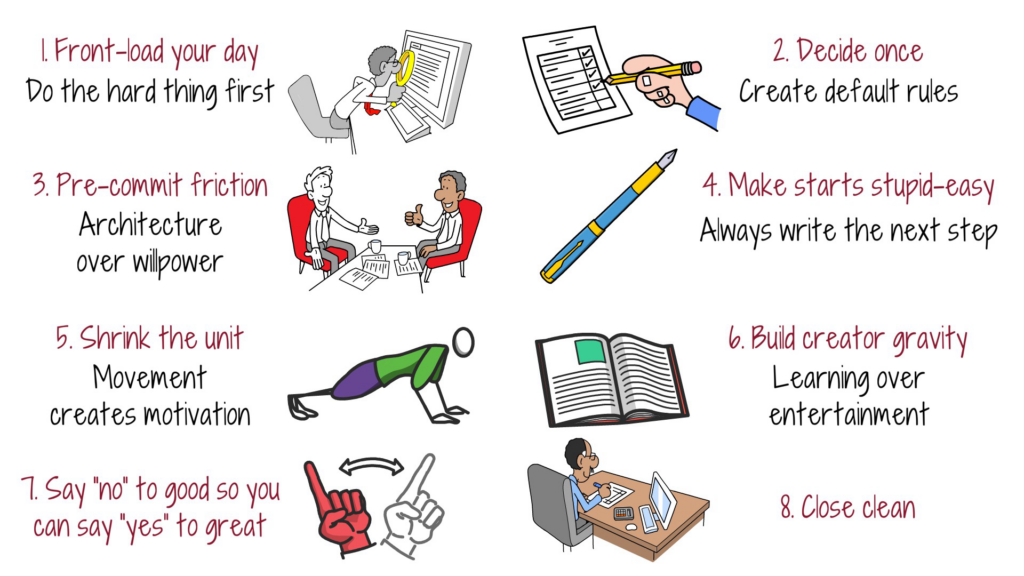
The Anti-Procrastination Operating System
- Front-load your day. Do the hard thing before you do anything. Put the deep block in hour one. Morning momentum carries. Evening resolve rarely shows.
- Decide once. Create default rules: “No meetings before 11.” “Phone stays outside the room.” “Two big tasks per day.” Systems remove minute-to-minute bargaining with your weaker self.
- Pre-commit friction. Use website blockers. Put your phone in another room. Schedule co-working with a friend. The point isn’t willpower, it’s architecture.
- Make starts stupid-easy. Always end a session by writing the next actionable step at the top of your document. Lowering activation energy beats pep talks.
- Shrink the unit. If you’re stuck, you made the unit too big. 10 push-ups, not “get fit.” 150 words, not “finish chapter.” Movement creates motivation, not the other way around.
- Build creator gravity. Replace 30 minutes of nightly entertainment with 30 minutes of learning aimed at a real project. Make sure the inputs have a job.
- Say “no” to good so you can say “yes” to great. Most delays are disguised detours – someone else’s “quick favour” or your own shiny side quest. If it’s not a hell-yes, it’s a no.
- Close clean. End each day by logging wins, setting tomorrow’s two priorities and prepping your workspace. Start lines beat finish lines.
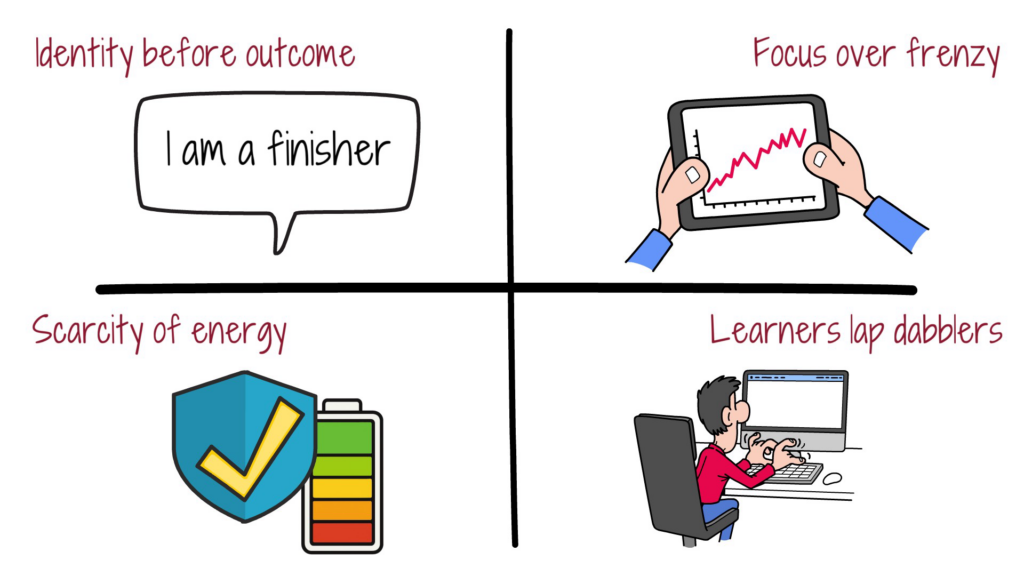
Mindset toggles that stick
- Identity before outcome. “I am a finisher” beats “I hope I finish.” Winners act like winners before results show.
- Focus over frenzy. You’re not paid to look busy. You’re paid to move needles.
- Scarcity of energy. Guard attention like cash. Every switch has a fee.
- Learners lap dabblers. Self-education compounds, entertainment doesn’t.
Default Path vs. High-Agency Path
“Busyness and exhaustion should be your enemy…Do less. But do what you do with complete, hard focus.” — Cal Newport, Deep Work
The Default: Snooze twice. Inbox first. Scatter focus. Delay the deep thing until you’re tired, then promise “tomorrow.”
High-Agency: Wake up with a plan. One deep block before inputs. One clear deliverable. One honest shutdown. The world can wait ninety minutes.
In conclusion
Procrastination isn’t destiny. It’s design.
Design your hours like they’re precious. Because they are.
Design your blocks so focus becomes the path of least resistance.
Design your identity so “I ship” becomes who you are.
Do this now: schedule two 50–90 minute deep-work blocks for tomorrow. Title each block with a single deliverable. Guard them like $1,000 appointments. Then honour them. Your future self is watching.
