
Excluding sleep, when was the last time you went a full hour without checking your phone?
Think about that urge you feel to pull out your phone. It can happen when there’s a brief gap in activities, when a TV show is not grabbing your attention, or even when a task becomes challenging – instead of working through it, you might feel a tendency to reach for your phone and scroll through social media.
Repeated attempts to flush your brain with dopamine are a means of short-term gratification. Washing away the outside world as tunnel vision sets in, covering your world with walls made of likes, shares, comments, reels, shorts, videos, and relentless refreshes. I’d wager you’re aware this is wasted energy and want to do something about it.
Well, I was just like you. Aware of the situation yet falling into its tight embrace every day.
Until I decided to do something.
So, with the knowledge I was wasting too much time scrolling without retaining anything of importance, I took a hard stance. A 30-day detox. Here’s what I learned and why it can help you.
Why Detox at All?
Before I dive into the ins and outs of my experience, it’s important to look at why a detox is necessary.
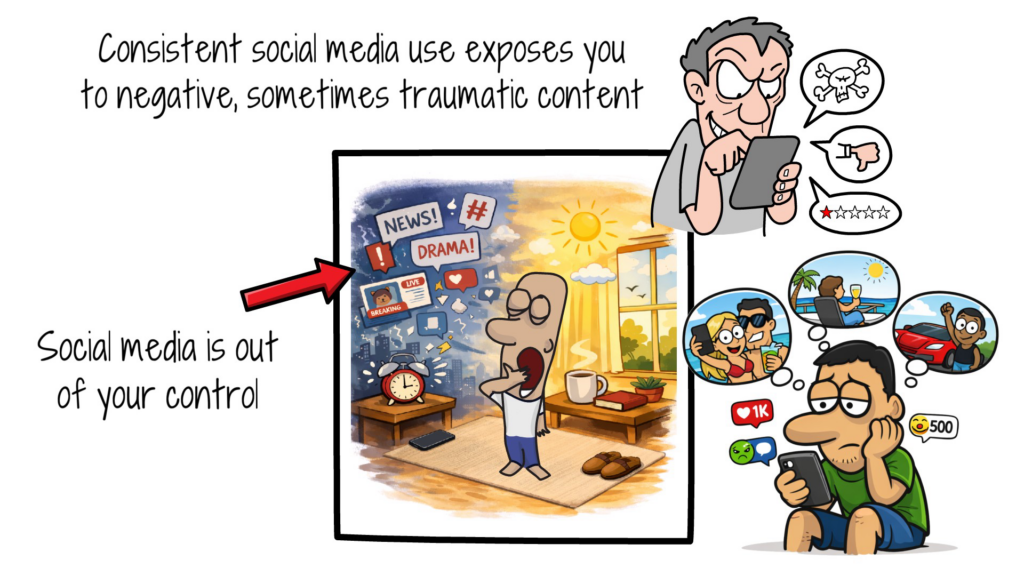
First of all, social media is out of your control. It rumbles on without you, so by the time you wake up, it could look completely different. The constant need to be contextually up to date continually pulls you back. It’s powerful.
Then there’s the content you bear witness to so often. In an interview with The Guardian, clinical psychologist Dr Roberta Babb says through consistent social media use, you’re exposing yourself to negative, sometimes traumatic content that can quickly become overwhelming. Looking further, Dr Babb highlights how social media makes it easy to compare your life with others, even people you don’t know. She says, “It can be quite damaging in terms of really denting people’s confidence and self-esteem and because it’s so prevalent and pervasive, it’s corrosive, it slowly chips away at people.”
A detox provides a break from all of this, or as Dr Babb puts it, you can “reconnect with who you are, what’s important to you, and give you more confidence in thinking you have a choice as to what information you access. What do you want to learn about? As opposed to feeling that you’re a passive recipient of all this information that’s washing around the internet.”
It’s a chance to reclaim some of your identity.
Now, onto what I learned.
The Emotional Rollercoaster of Week One
The first week was challenging. I deleted all my social media apps, let friends know, and for most of the working day, put my phone out of sight. After just a few hours of the first day, I noticed I frequently reached for my pocket. If something wasn’t grabbing my full attention, my arm would move without thinking. I thought to myself, ‘If it has become muscle memory, this is going to be a long 30 days.’
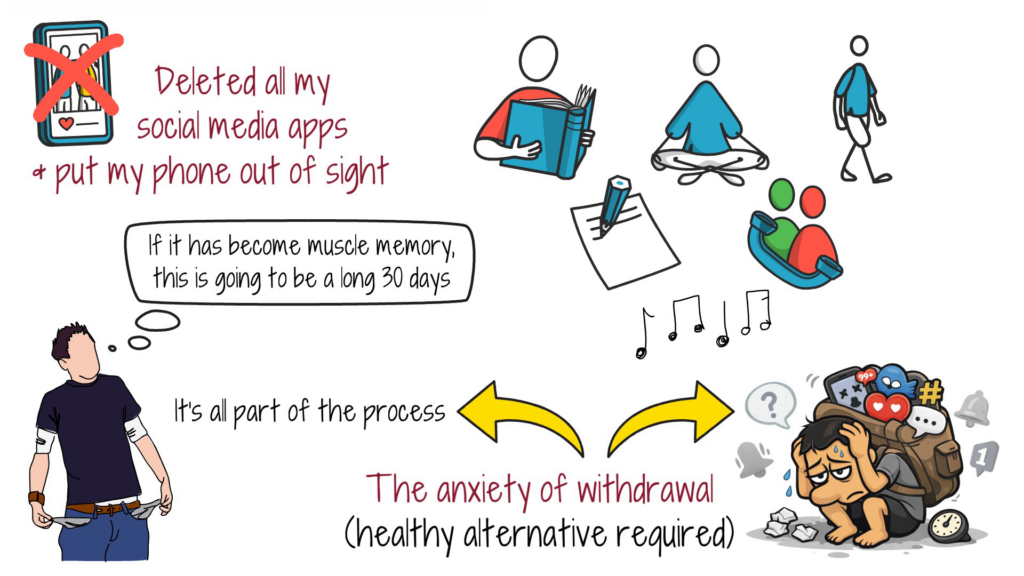
A few days in, the anxiety of withdrawal started creeping in, weighing me down under the fear of missing out. I found myself increasingly desperate to see what I’d missed. This is when I realised, I need to find a healthy alternative to fill those gaps, such as reading a book, practicing mindfulness, going for a walk, finding new music, journaling, or calling a friend. Basically, anything easily accessible and good for me.
During this first week, I had to remind myself this is all part of the process. In fact, seeing its effect on my mood was enlightening.
Week Two: The Mental Fog Lifts
A week often flies by. But when you cut out social media, the passing of time becomes skewed because you realise just how much time passes when you’re mindlessly scrolling – something that became painfully apparent to me during my second week of the detox. Not only did my days feel longer and more fulfilled because I was filling my time with healthy activities, but I also had better sleep, deeper focus, and intentional connection. Essentially, I was able to start working towards long-term gratification, thereby regulating my dopamine levels.
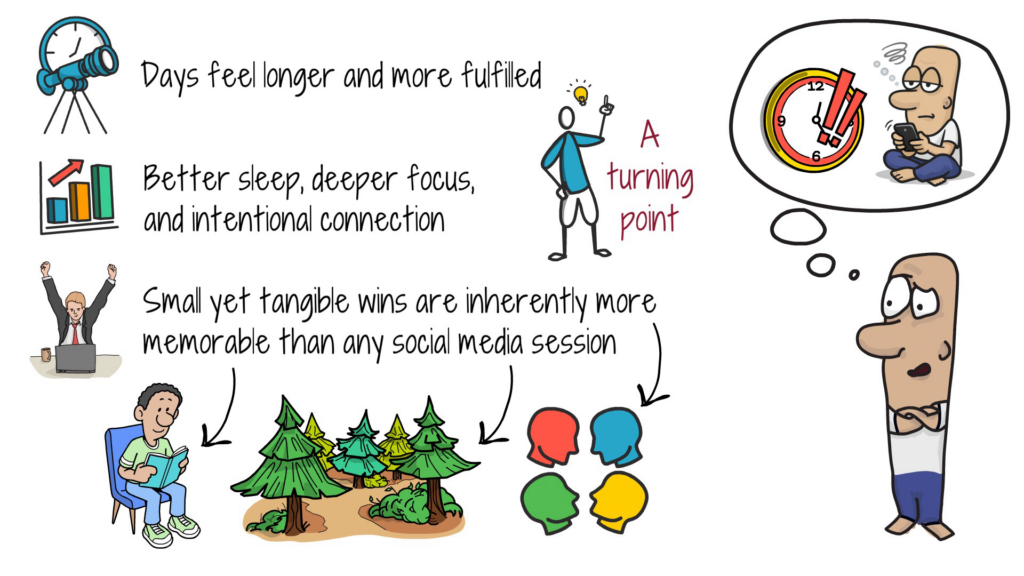
The small yet tangible wins are inherently more memorable than any social media session, I came to realise in the second week. I finished a book I’d been reading for what felt like forever, found a path that led me to a beautiful forest a mere 15-minute walk from my house, and had several meaningful conversations with friends and family (using my phone as it was originally intended).
All in all, this week was a turning point. I still found myself tempted to redownload the social media apps, but it was becoming apparent just how many benefits I was getting from their absence.
The Big Shift: Reclaiming Your Mood and Mind
By this point, a lack of social media was my regular daily experience. I had gotten used to the reality. This also meant I began feeling the benefits on a deeper, more psychological level. The consistently meaningful wins had a tremendous emotional impact on my wellbeing. For example, I felt relieved at the lack of comparison to other people’s lives through the narrow lens of social media. It meant I had the mental capacity to focus on my journey and those close to me. From there, I felt a surge of gratitude for my reality and experienced a vastly improved self-esteem.
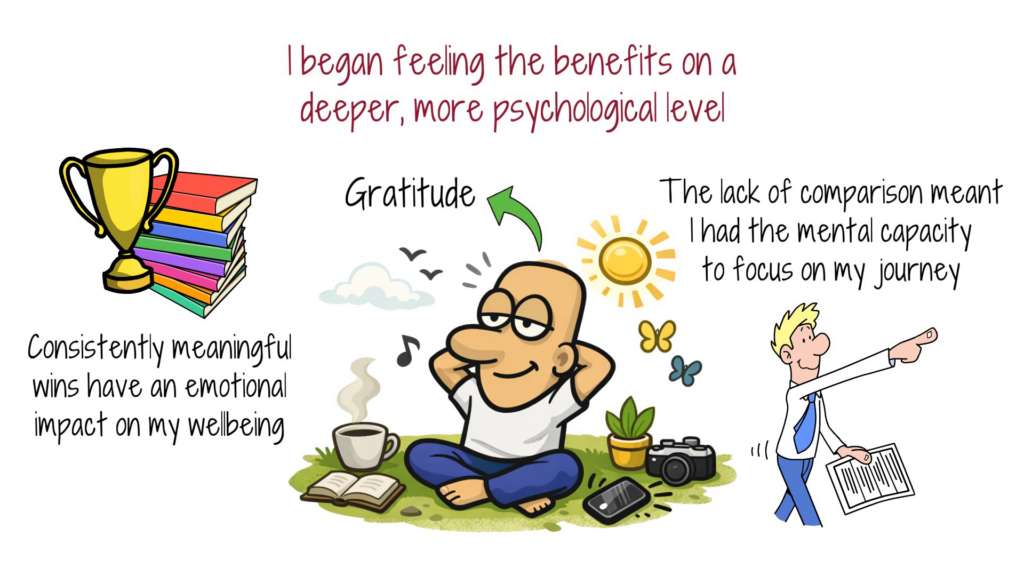
It felt easier to invest in myself.
Life After the 30-Day Detox
Of course, this is just a 30-day detox. You may feel compelled to permanently delete your accounts, but while social media has its negatives, there also many positives. For many people such as myself, completely cutting it out is not an option.
So, when I reintroduced social media, I decided to enforce strict boundaries, such as:
- Only viewing social media on my desktop.
- 20-minute time blocks with a timer to prevent falling into the void.
- Never reinstalling apps on the phone.
These steps are obstacles designed to make access to social media more difficult.
How to Start Your Own Detox
A social media detox doesn’t simply mean telling yourself you won’t look at the apps for a few days. To be effective, it must go a step further. Here are the practical steps I used:
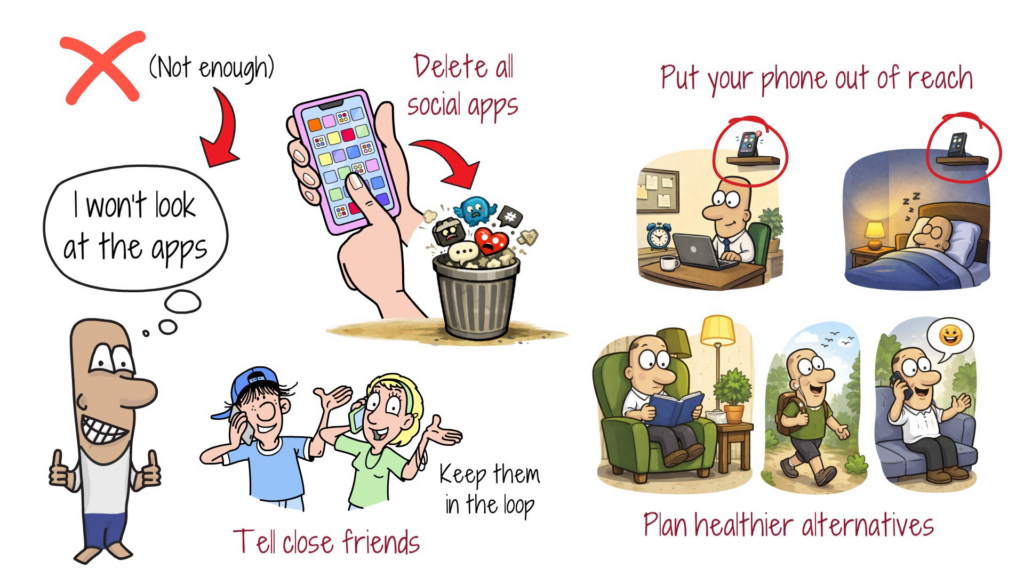
- Delete all social apps – you don’t need to delete your account permanently. Deleting the apps from your phone won’t delete all your data, so by taking this step, you’re adding a necessary hurdle to accessing social media.
- Tell close friends – of course, social media apps are handy for staying connected with friends, so suddenly vanishing from an app you regularly use could worry your close friends. Keep them in the loop so they know to reach out directly if needed.
- Put your phone out of reach – you’ll see just how often you reach for your phone, just as I did. Do this during work hours and before bed.
- Plan healthier alternatives – honestly, when you don’t have your phone around, it’s easy to see how many healthy activities you could be doing, such as reading, journaling, walks, or even calling a friend. Nowadays, I always make sure I have a book near me.
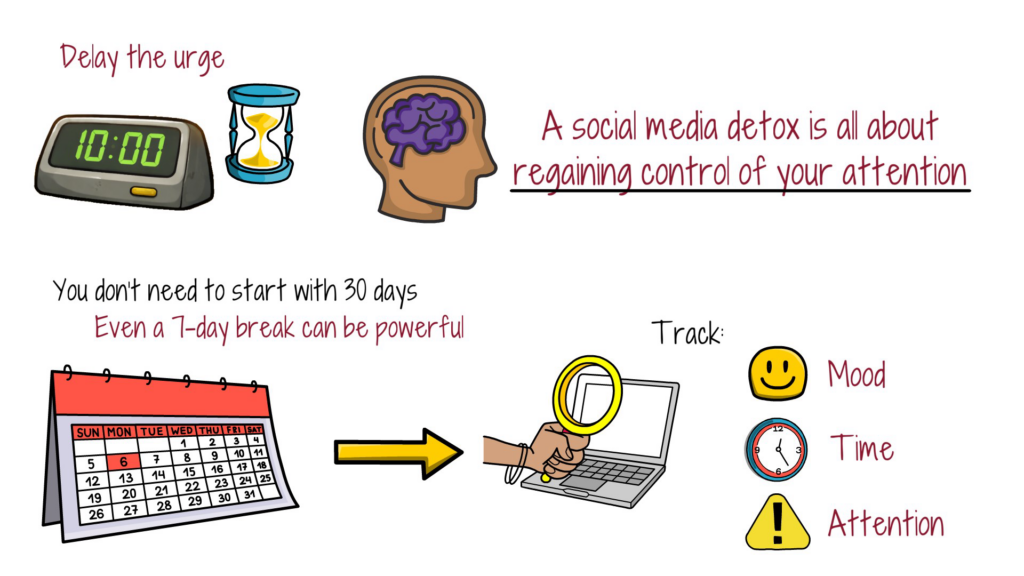
- Delay the urge – practically, a detox requires you to make it more difficult and rewarding to not use social media. A 10-minute timer when you feel the itch to scroll is a necessary obstacle in the otherwise highly accessible journey towards social media doomscrolling.
A Parting Message
Before this article ends, it feels necessary to remind you that you don’t need to start with 30 days. Even a 7-day break can be powerful and, when you’ve never done something like this before, it’s important to ensure the process is actually achievable. 30 days is a lot, and it’s important you don’t set yourself up to fail. Looking deeper, I would suggest tracking your mood, time, and attention during that week. Otherwise, the experiment’s impact are merely thoughts floating in your head rather than realised, understood and acknowledged lessons.
With that all in mind, I want you to remember that a social media detox is all about regaining control of your attention. For me, this proved life changing. I realised just how much these apps are seeking your attention, and how easy it actually is.
Your attention is what moves your life forward. It’s time to take it back.
