
Start here: Browse the Self-Improvement Guides and pick the path that fits your situation.
“You idiot”
“Why did I do that?!”
“How did I get here?”
The things we say to ourselves matter. Even if you have people around you describe who you are and compliment your traits, if you don’t believe them, none of it matters. After all, no one is going to steer your ship for you – the person you want to be is a product of the actions you take and the choices you make.
Think of it this way. A car needs your hands at the wheel. Without your input, it will veer out of control. Your identity, and subsequently your future, require your hands at the wheel. Otherwise, you may end up feeling like you’re stuck living a life that isn’t yours, straying down a path you never intended to take.
Here’s the thing, you don’t need to take ayahuasca in the mountains or spend thousands on online courses to start putting the odds in your favour. By putting the work in to change the story you tell yourself, you can transform your future. This process starts when you begin to learn just how intrinsic your identity and your fate are. While fate can feel somewhat distant and untouchable, it’s easier to comprehend making changes to your identity.
Think about the way you perceive yourself. The things you say. The things you do. The parts of your identity you like and don’t like. They matter because that is who you are. The person you are then shapes your fate.
Why Identity Shapes Your Fate
Changing your inner narrative can completely shift your trajectory. Think about those negative things you tell yourself, criticising and berating your behaviour. Ask yourself: would you say the same to your friends?
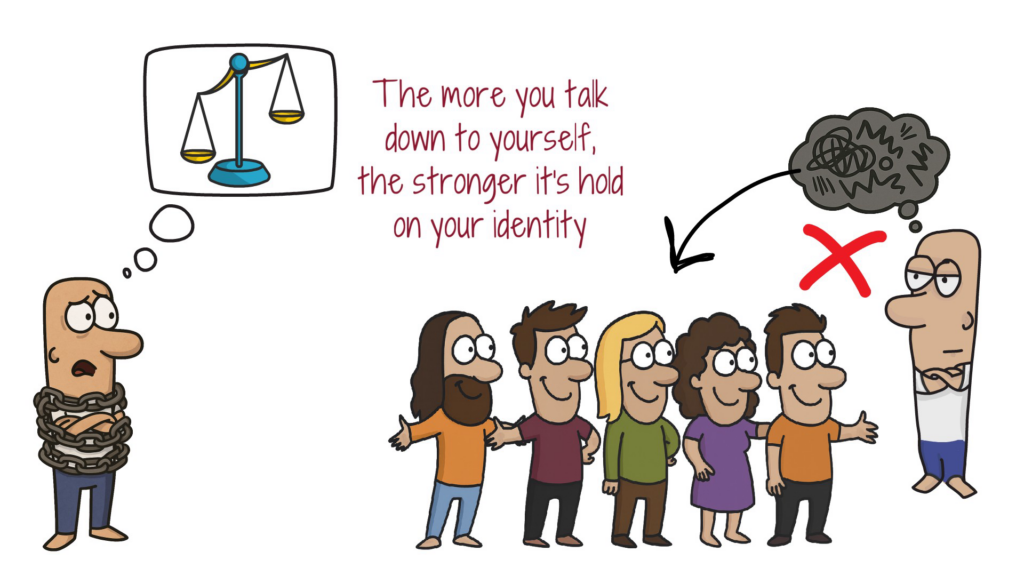
No, you wouldn’t. If you did, you’d lose friends quickly. However, without that moral buffer, it can prove easy to slip into negative self-talk. The more you talk with yourself that way, the stronger a hold that opinion has on your identity. For example, if you continually express that you’re bad at making decisions, after too long, you’re essentially labelling yourself as such. Before you’ve realised, you doubt your opinion to the point where you are a bad decision maker, or at least, someone who doesn’t trust their gut.
It may not seem revolutionary, but the beliefs you hold about yourself subconsciously guide decisions and actions. If you believe that while you could learn to trust your instincts a little more, you still have the capacity to make good and wise decisions, then you’re leading with optimism. It is better to believe in yourself, experience failure and learn from it than not believing from the beginning. To rewrite your identity and change your fate, you must first believe it is possible to alter your life in small ways. People often don’t realise that no one is going to fix the problem for you – your identity is yours to shape and lead you into a prosperous future.
Identifying Your Current Narrative – Self-Awareness
You can’t start rewriting your identity without first developing or at least working on your self-awareness. People with strong self-awareness can pinpoint their shortcomings and learn how to improve. It’s the ability to step outside of your mind and look at your thoughts and feelings from a more critical standpoint. After all, despite the millions of thoughts you have every day, you don’t have to listen to each of them. Although they contribute to your perception of yourself – and your identity – what you choose to do with them can define you.
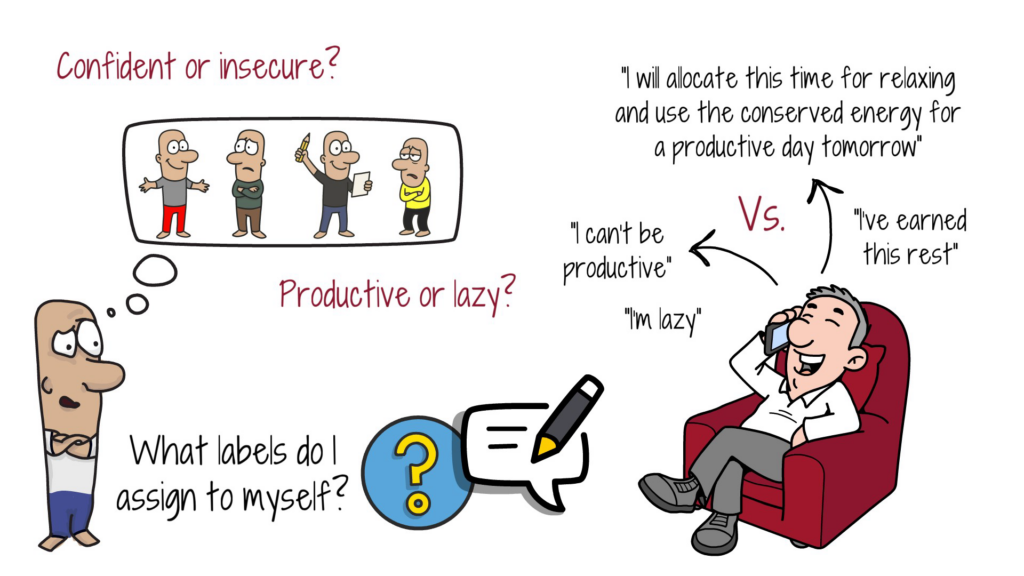
First, it’s worth highlighting the labels you continually assign to yourself. Do you consider yourself confident or insecure? Productive or lazy? Reflect on your core beliefs and ask – “what labels do I assign to myself?” Practice journaling key descriptors (e.g., “I’m not creative” or “I’m not shy.”)
Let’s say you spent a few hours relaxing, deciding to push some tasks to the next day. This can go a few ways. For instance, if you consider yourself lazy but want to be more productive, this scenario could exacerbate your self-perception (e.g., “I’m lazy, I can’t be productive.”) However, when you believe yourself to be productive, those relaxation hours allow you to recharge for a successful day (e.g., “I’ve earned this rest. I will allocate this time for relaxing and use the conserved energy for a productive day tomorrow.”) See the difference? With the right self-perception, you can mould your identity for a fate that suits you.
Breaking Limiting Beliefs – Spot the “Lie”
To understand what this means, imagine your drive to work. You’re running late and, for some reason, ‘every single’ red light decides to impede your journey. In reality, it was only two or three lights, but it quickly feels like the world is against you. This is the ‘lie.’
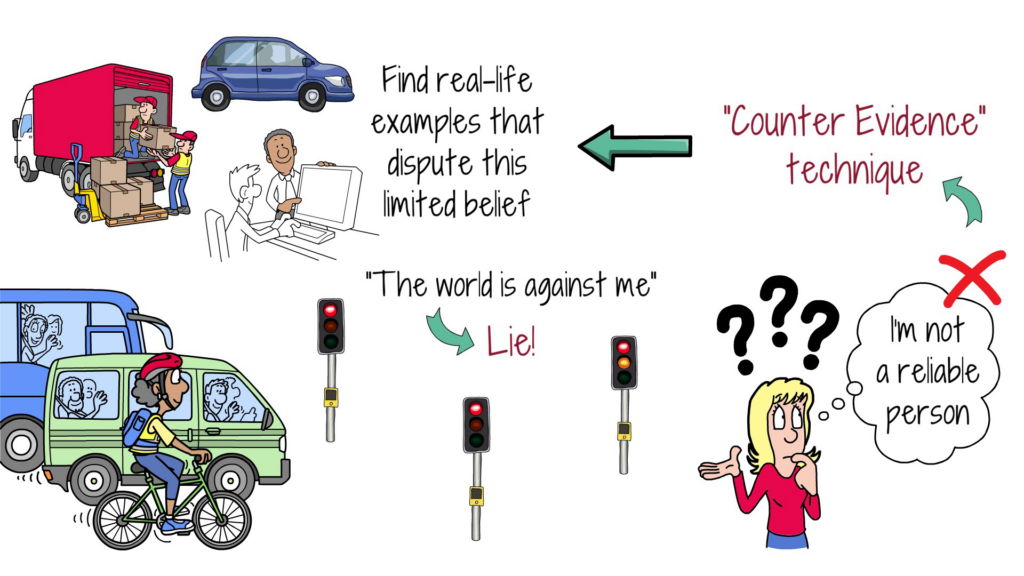
For example, the lie you tell yourself – that you’re not a reliable person and never have been – is a learned belief from past experiences. You can use the “Counter Evidence” technique to prove this to yourself. Find real-life examples that dispute this limited belief. You’ll find there are far more examples than you realise – experiences you are overlooking. There will be times when you have proved your reliability – when you’ve been there for a friend, helped someone move, or just given someone a lift. Chances are that the recipients of these acts of care have noted your reliability more than you realise.
So, spot the lie and, well, challenge it!
Steps to Rewrite Your Identity – Define Your “New You”
It’s all well and good knowing all your negative self-labels. It’s another thing entirely to remove and replace them. But, it’s within your grasp. Start by choosing traits or mindsets you want to embody, such as resilience, open-mindedness, and confidence. Ultimately, these are merely words. Without any action, that is all they remain.
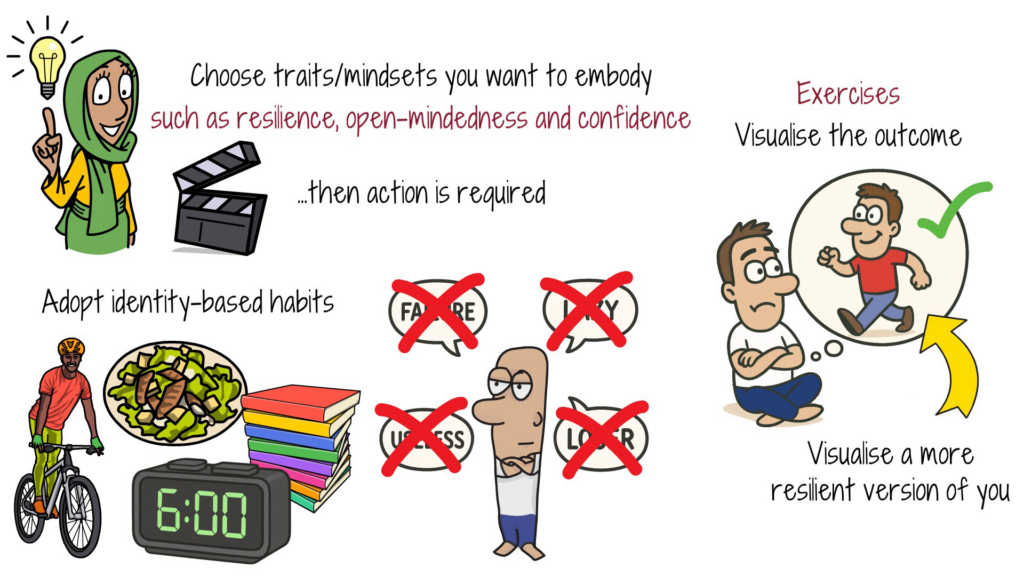
Try some exercises. For starters, you could visualise the outcome. Every day, try and visualise your potential lived experience with this new identity. There’s a more resilient version of you strutting around, not letting things knock you down. It’s a reality that isn’t too difficult to imagine – that’s the point. You’re still you, after all. A goal like this should be achievable, not so far-fetched you cannot even fathom it in your imagination. That reality is a possibility.
Another, more long-term solution is to adopt identity-based habits. This is an excellent practical method as you can track your progress. You can align routines with the traits you’re aiming to achieve. For example, if you want to be “disciplined”, set a strict wake-up time.
Small Daily Reinforcements – Affirmations or Mantras
Think back to the start of this article for a moment. The seemingly inconspicuous things we say to ourselves lay the foundations for an identity that is not conducive to a prosperous future. Then there’s a lack of commitment with our actions – not taking time to intentionally rest, learn, or generally improve ourselves. It’s so easy to fill our lives with negative words and non-directional action. The words we say and actions we take hold immense power – power that works both ways. It can be harnessed for good.
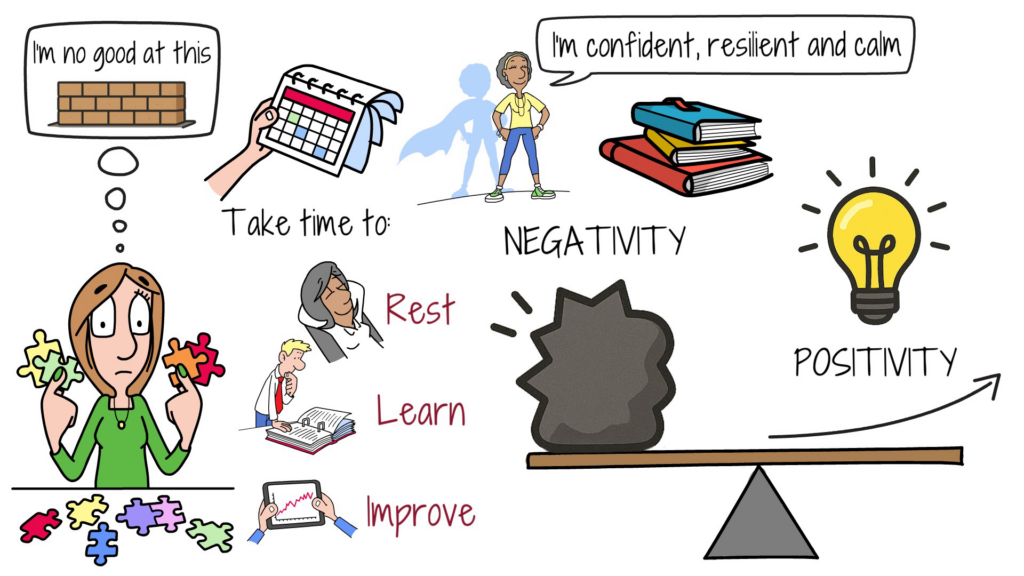
So, starting now, try reciting short, power-packed statements that reinforce your chosen identity. It may sound obvious and feel somewhat cheesy, but affirmations hold real power. Start by telling yourself you’re confident, reassuring your resilience, or encouraging calm. You could go one step further and commit to bite-size tasks, such as reading relevant non-fiction or watching some videos. This helps strengthen your belief in your new self-image.
Conclusion
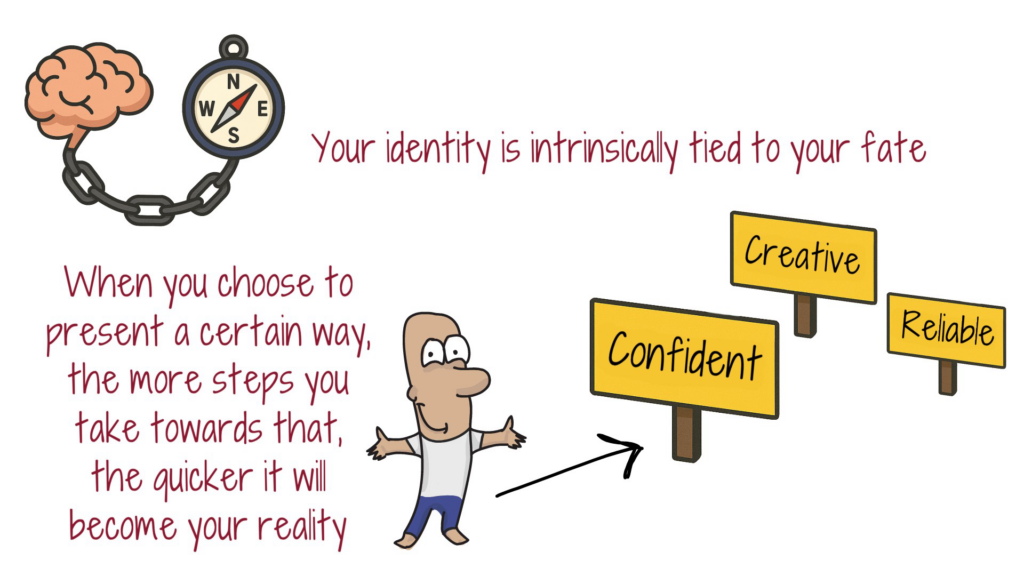
Let’s conduct a quick recap of what we’ve learned in this article. For starters, your identity is intrinsically tied to your fate. Of course, there are matters that are out of your control. It’s important to remember that. But there’s an awful lot you can control. When you choose to present a certain way – whether that’s confident, creative, or reliable, the more steps you take towards that, the quicker it will become your reality. From there, the consequences will take hold.
So, take some time to really think about who you are and the traits you exhibit. What can you do to improve them? Or completely change them for a different future? The power is in your hands.
