
Start here: Browse the Self-Improvement Guides and pick the path that fits your situation.
Imagine yourself sitting in a room filled with all kinds of things that cover all of the bookshelves, furniture, and floors. A small table in front of you is scattered with stacks of magazines and digital devices, like a laptop, phone, and ipad.
Now try another scenario, but this time imagine sitting in a room that is clear of clutter. The shelves contain personal items that are meaningful to you. The floor is clear and clean, and the small table in front of you has only a vase of flowers and a book that you’re currently reading.
Which of these two scenarios seemed more comfortable for you? Mental clutter mirrors physical clutter. If you thought the second scenario was more relaxing, you might want to read this article, and learn more about how minimalism and decluttering can free your mind.
The Psychology of Clutter and Stress
The connection between clutter and anxiety is real. One study by Catherine Roster, PhD at the Anderson School of Management, determined that “When there’s lots of clutter, you lose control over your physical environment, which is very defeating and can bring on stress, depression, or anxiety.”
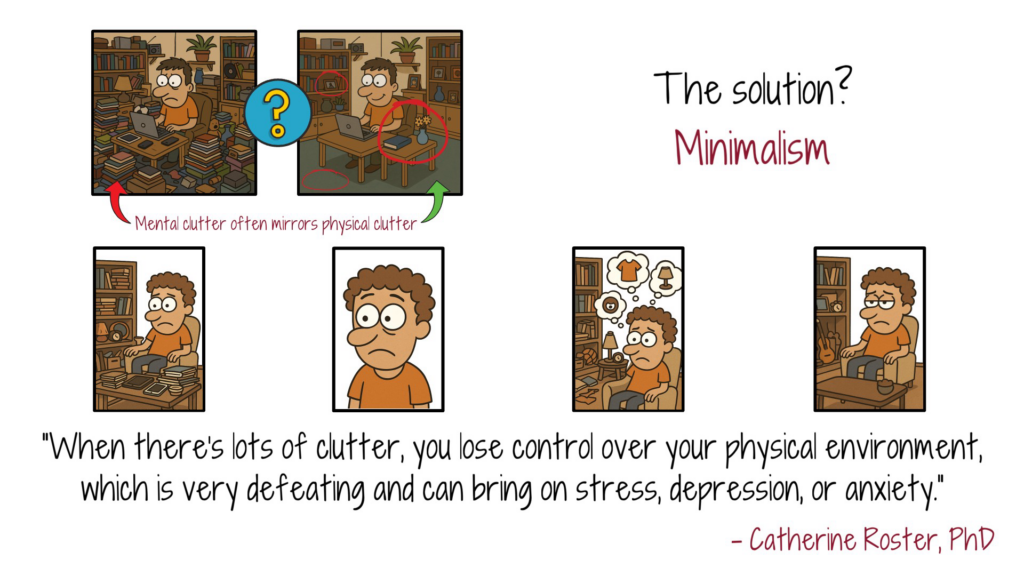
It can be exhausting to try to organize your thoughts in a room filled with distractions. Many people don’t even realize they’re putting their brain on overload. For example, every time you see something, your mind places it into a specific category. While you’re sitting there trying to relax, your mind is busy working on trying to create some sense of order in your environment.
If you’re finding that clutter is creating cognitive overload in your life, what options do you have to change it? One solution could be minimalism.
The Principles of Minimalism
Minimalism is often looked at as living without things. Some people think it’s about not owning anything. But in truth, minimalism is about living with awareness. When you really think about what you own, and why you own it, you may feel differently about what you need or want.
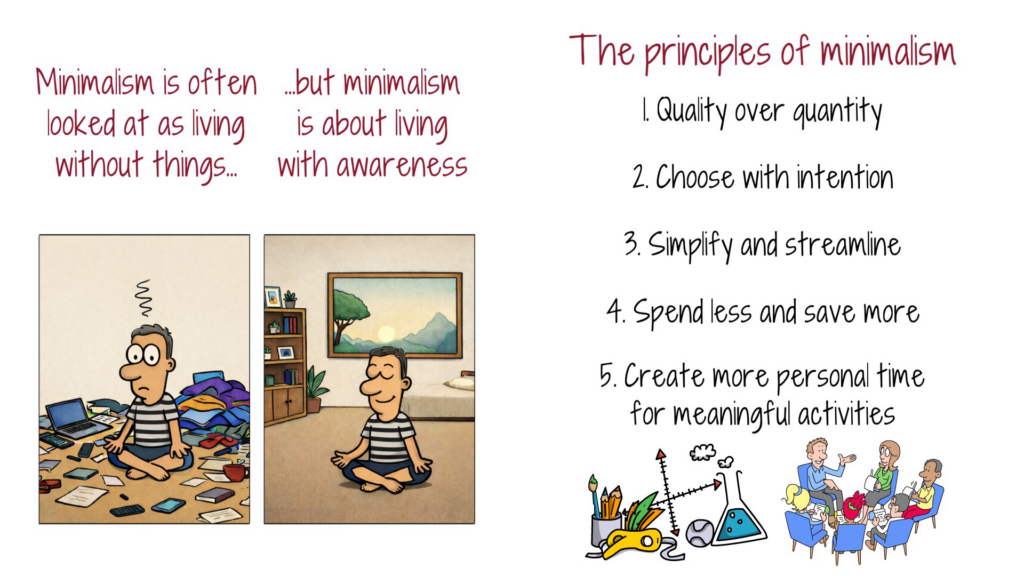
The principles of minimalism are pretty simple in themselves:
- Quality over quantity
- Choose with intention
- Simplify and streamline
- Spend less and save more
- Create more personal time for meaningful activities involving personal growth, hobbies, relaxation, and time with people you care about.
When your environment is less complicated, your life becomes less complicated also.
Shifting your Mindset
Overthinkers often have trouble with decisiveness, because there are too many choices. Shifting your mindset is the first step to freeing your mind. Reframe the fear of letting go by focusing on what you gain, like peace and clarity rather than the excess stuff you are losing.
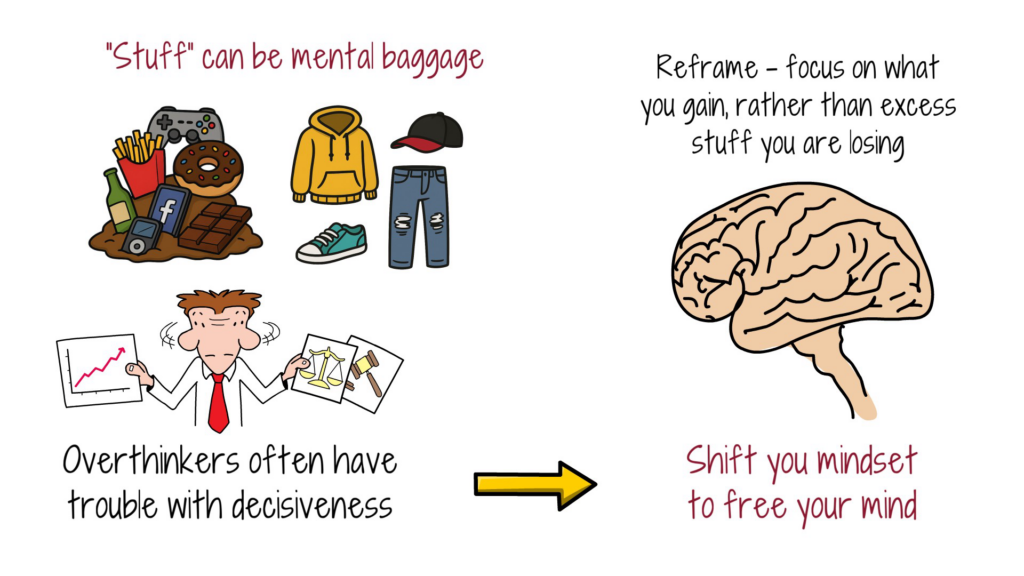
Try to realize that “stuff” can be mental baggage. The more you own, the more you are stressing your subconscious brain to manage it all. Once you accept the idea of change, the next thing to do is to take action.
Step by Step Decluttering Approach
There are several ways to declutter your living spaces. One place to start is to set up your work space. Choose a location to bring your sorting items to and get three boxes to put things in.
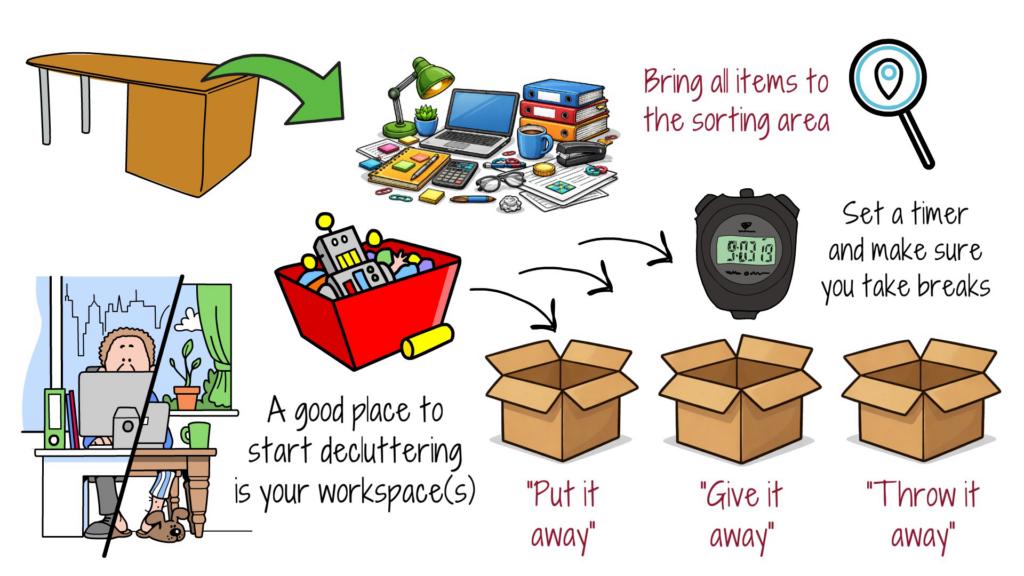
Label your boxes with, “put it away”, “give it away”, and “throw it away.” Each item you sort will fit into one of these categories. Now set a timer for how long you want to work, and take a break when the timer goes off to avoid getting burned out or overwhelmed.
The next step is to choose one room and clear off all tables and countertops. Bring all items to the area where you intend to work. Your environment will already look instantly less cluttered, simply by taking everything off the surface areas. Once you’ve got a pile to work on, you can start sorting.
Whether you choose to start with drawers, closets or cupboards, the process is still the same. Choose one drawer, or one cupboard, and bring the entire contents to your sorting area. Keep it simple by just doing one group at a time.
How do you decide which box to put an item in? Well, trash may be the easiest to spot. If an item is broken, useless, outdated or just plain junk, it’s pretty easy to toss it into the “throw it away” box. Look at all of the stuff and pick those things out first.
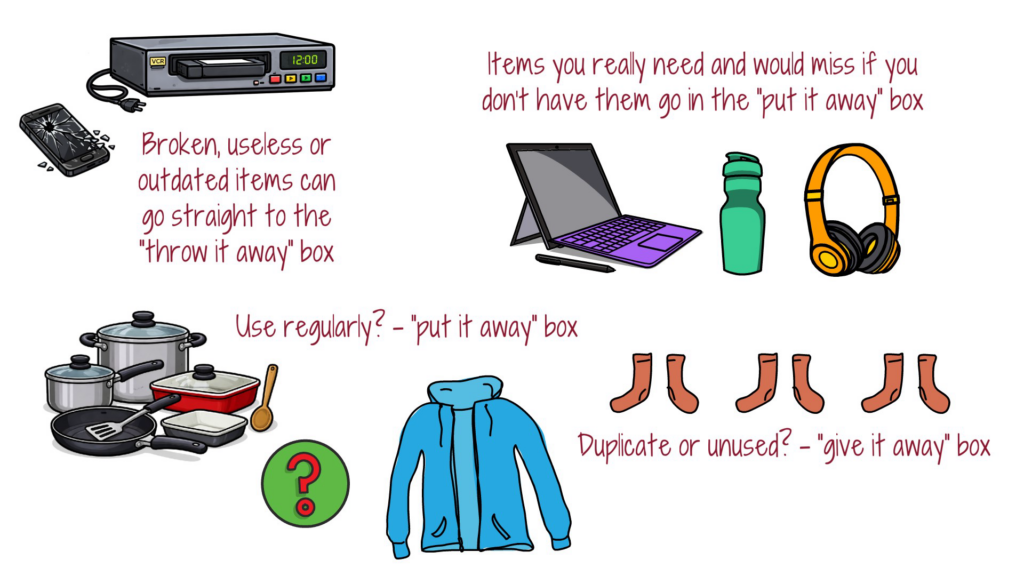
Next, look at each item and decide if it’s something you really need and would miss if you don’t have it. Those will go in the “put it away” box, and when you’re done sorting, you can put away everything that ended up in that box. Don’t do it now. Just keep sorting.
Finally, the items that are left are the ones you have to give the most thought to. Do you want to keep the items or give it away? If it’s something you use regularly, you may have already put it in the “put it away” box. But what if you’re not quite sure? What if it’s something that has value, but maybe you have duplicates of that item. Or what if you’re sorting clothes, and it’s a good sweater, but you find you just never really wear it? These are “give it away” items. They may be useful, but you just really don’t need them.
Another category that can sometimes be difficult is sentimental items. There’s nothing wrong with keeping things that are meaningful to you and bring you joy. You may decide to keep one box of childhood memories. Minimalism isn’t about throwing everything out, but you don’t have to keep everything either.
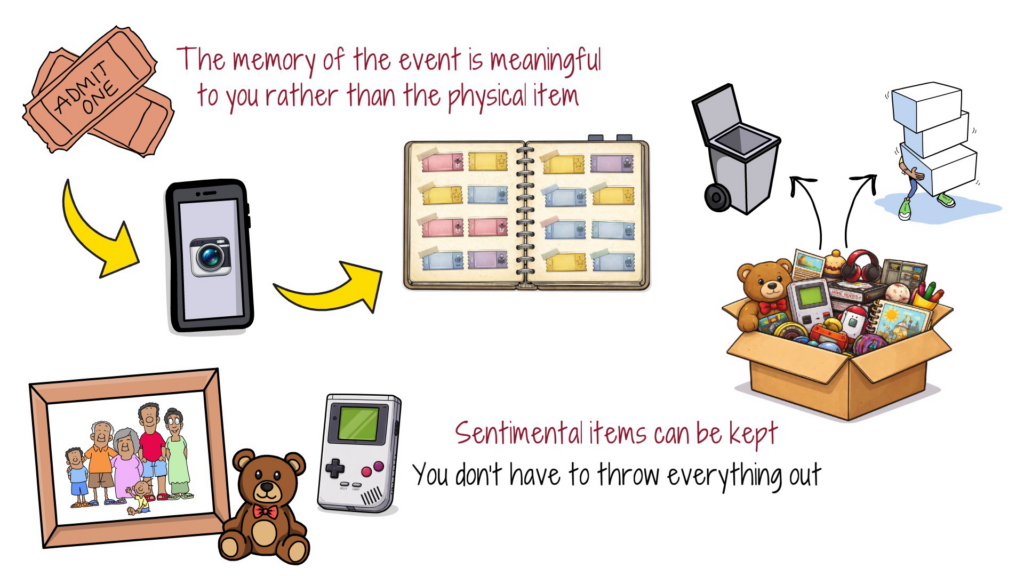
What about something like concert tickets? Some people save them as a memento, but the reality is that it’s the memory of the event that’s meaningful to you, not the tickets themselves. If you have items in that category, you could take a photo of it, and then toss the actual tickets into the “throw it away” box. If you want to browse through your photos later and recall some special memories, they are still available to you in that way. You could even place these in a scrapbook if you still feel the need to have a physical item to represent that keepsake.
When you have completed a sorting pile, it’s time to empty your sorting boxes. Take out the trash, place the “give away” box in your car to donate, and put away the rest of the items that you decided to keep. Be mindful to put things away neatly and well organized. If you find you kept too many things, you can always repeat the process another time.
Sustaining Your New Minimalist Lifestyle
Minimalism is an ongoing process and what is important to you now, may not be important tomorrow. You will need to revisit your spaces on a regular basis.
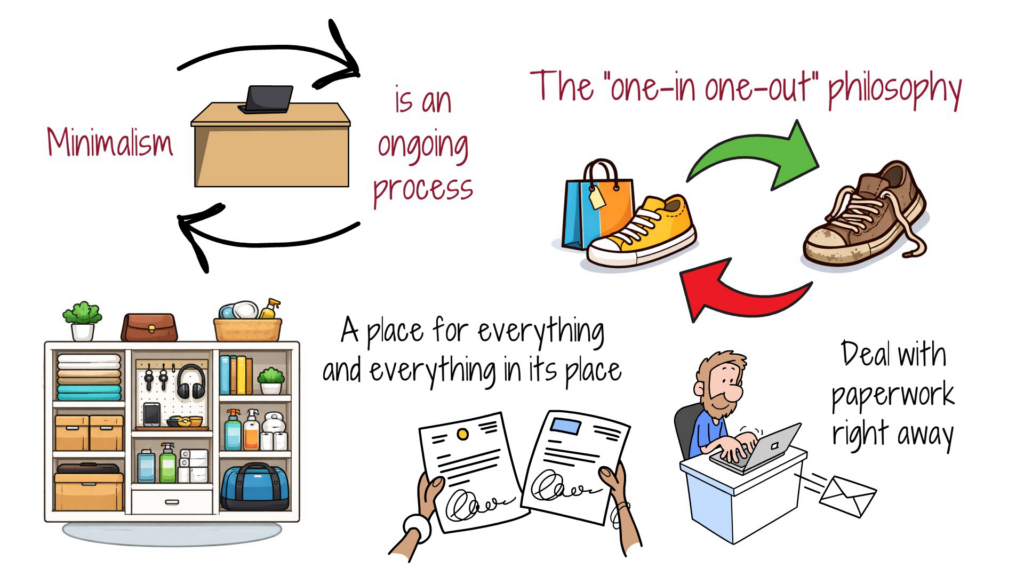
Avoid filling your house back up again by using a “one-in one-out” philosophy. When you get something new, it’s important to think about what you’re purchasing and how you can get rid of something else to make room for it.
A few tips for maintaining your living spaces can help you keep on track with resisting more clutter:
- A place for everything, and everything in its place. This tip makes it easy to keep things tidy, and limits extra house cleaning.
- Deal with paperwork right away. Sort mail and other papers as they arrive so they won’t stack up.
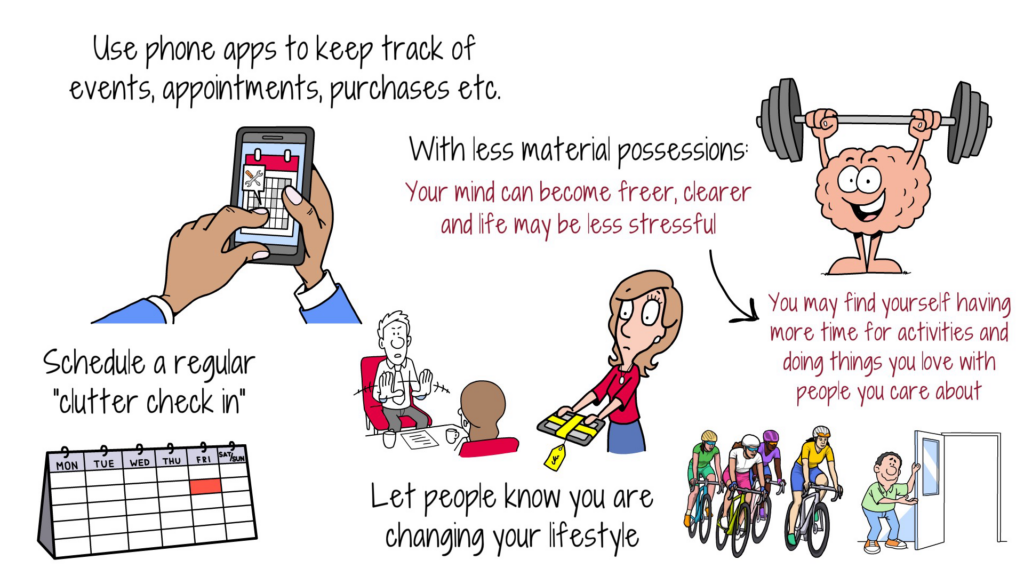
- Use phone apps to keep track of things like events, appointments and purchases, rather than saving invitations, receipts, or even some documents that can be scanned and stored digitally.
- Schedule a regular “clutter check in.” Catch accumulated items before they stack up again.
- Let people know you are changing your lifestyle. It’s nice that people sometimes want to give you things, but it’s okay to let them know you’re cutting back on your material items. It’s also okay not to keep a gift out of guilt or obligation. You can enjoy it for a while, and then pass it on.
Final Thoughts
Minimalist lifestyles can be especially beneficial for people who tend to overthink things. With less material possessions to focus on, your mind can become freer, clearer, and life may be less stressful.
With minimalism, you may find yourself having more time for activities and doing things you love with people you care about. Spend less on “things” and open the door for what else life has to offer.
